
Sanatan Dharma is often described as one of the oldest spiritual traditions in the world, but for many people, its true meaning still feels unclear. In simple terms, Sanatan Dharma refers to an eternal way of living that is based on universal truths, moral values, and spiritual awareness. It is not limited to rituals or beliefs alone, but extends to how a person thinks, behaves, and lives their daily life.
In recent years, more people have started searching about Sanatan Dharma. This growing curiosity comes from a desire to understand deeper life questions—such as purpose, peace, discipline, and inner balance. In a fast-moving world filled with stress and confusion, people are naturally drawn toward systems that offer clarity and stability. Sanatan Dharma provides that by focusing on timeless principles rather than rigid rules.
One of the most important aspects to understand is that Sanatan Dharma is not just a religion in the modern sense. It is often called a “way of life” because it covers every aspect of human existence—from daily habits and relationships to spiritual growth and self-realization. It does not force a single path but allows individuals to explore and follow what suits their nature and understanding.
In this blog, you will learn what Sanatan Dharma truly means, how it originated, and why it has remained relevant for thousands of years. You will also understand its core ideas in a simple and practical way, so that you can connect these teachings with your own life. Whether you are completely new to this topic or looking to deepen your understanding, this guide will help you see Sanatan Dharma in a clear and meaningful way.
What is Sanatan Dharma
To understand Sanatan Dharma, we first need to understand the meaning of the word itself. The term “Sanatan” means eternal, timeless, or something that has always existed and will continue to exist forever. “Dharma” refers to duty, truth, and the natural order that maintains balance in life and the universe. Together, Sanatan Dharma can be understood as the eternal principles that guide righteous living and maintain harmony in existence.
Unlike many belief systems that were started by a particular individual at a specific time, Sanatan Dharma does not have a single founder. It is not a man-made system created with fixed rules. Instead, it is a collection of knowledge, practices, and insights discovered by ancient sages over time. These truths were not invented but realized through deep observation, meditation, and understanding of life and nature.
Another important aspect of Sanatan Dharma is that it is not rigid. It does not demand blind belief or force everyone to follow the same path. Instead, it encourages individuals to explore, question, and understand truth through their own experience. This flexibility is one of the reasons why it has remained relevant across different ages and cultures.
At its core, Sanatan Dharma teaches that life is interconnected and guided by universal laws. It emphasizes living in balance, performing one’s duties with honesty, and striving for self-awareness. Rather than focusing only on external practices, it places great importance on inner growth and understanding.
In simple words, Sanatan Dharma is a timeless guide to living a meaningful, balanced, and conscious life.
Origin and History
The roots of Sanatan Dharma go back thousands of years, making it one of the most ancient living traditions in the world. Its origins are not tied to a single event or moment in history, but rather developed gradually through generations of knowledge and experience.
The earliest phase of Sanatan Dharma is often associated with the Vedic period. During this time, ancient sages explored the nature of life, the universe, and human existence. Their insights were preserved in the form of sacred knowledge, which was initially passed down orally from teacher to student. This tradition of oral transmission ensured that the teachings remained accurate and alive for centuries before being written down.
As time progressed, Sanatan Dharma evolved and expanded. New ideas, philosophies, and practices were added based on deeper understanding and changing social conditions. This ability to adapt without losing its core values is one of the reasons why it has survived for so long.
Throughout history, Sanatan Dharma faced many challenges, including social changes, cultural shifts, and external influences. Yet it continued to exist and grow because it was never rigid or limited. Its foundation was based on universal truths rather than fixed doctrines, which allowed it to remain relevant in different times and environments.
Another reason for its long survival is its focus on personal experience rather than blind belief. People were encouraged to understand and apply the teachings in their own lives, which kept the tradition meaningful and practical.
Today, Sanatan Dharma continues to influence millions of people around the world. Its teachings on balance, discipline, and self-awareness remain as relevant as ever, proving that its principles are truly timeless.
Difference Between Sanatan Dharma and Hinduism
One of the most common questions people ask is whether Sanatan Dharma and Hinduism are the same. While they are closely connected, they are not exactly identical. Understanding this difference is important because it clears many misconceptions and helps you see the depth of the tradition more clearly.
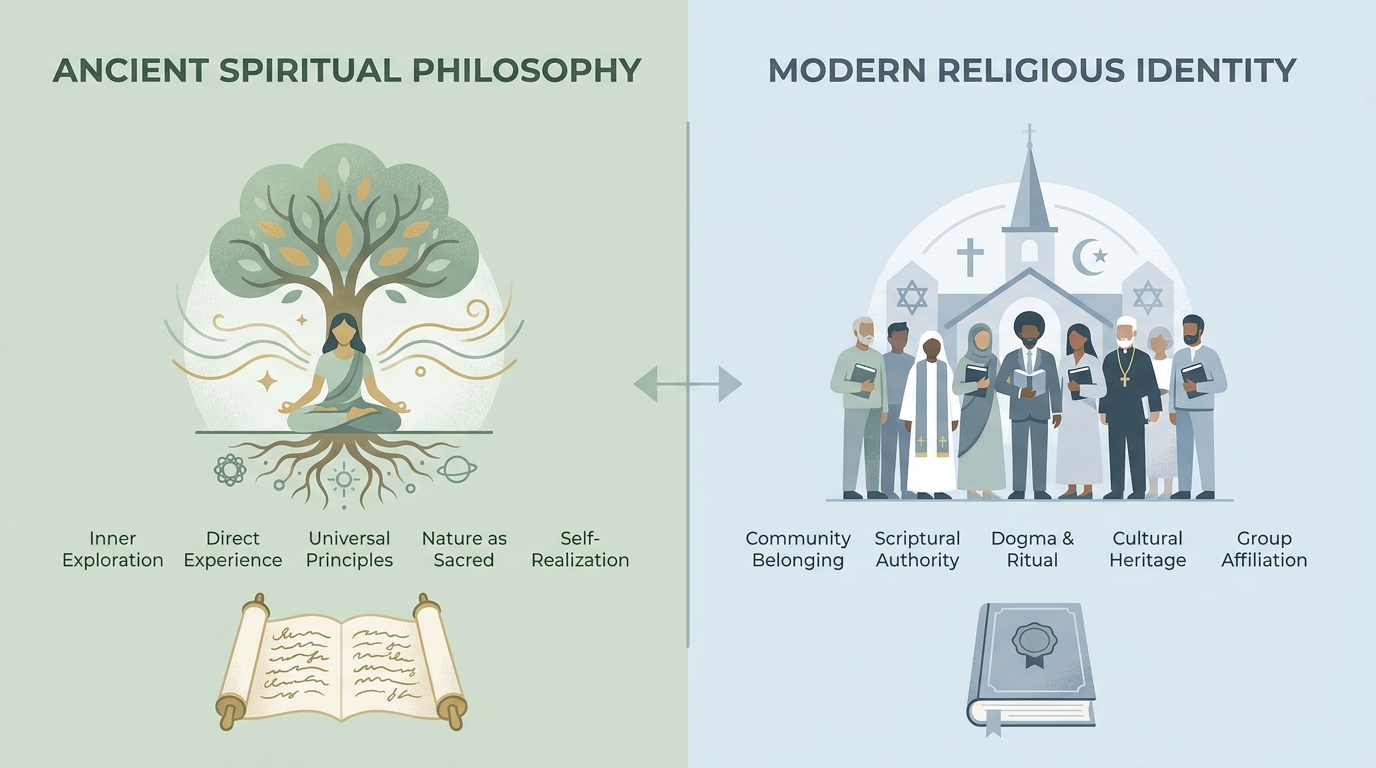
The word “Hinduism” is actually a relatively modern term. It originated from the word “Hindu,” which was used by outsiders, particularly Persians and later others, to describe the people living beyond the Indus River. Over time, this geographical identity turned into a broader label used to describe the diverse spiritual and cultural practices followed in the Indian subcontinent.
Sanatan Dharma, on the other hand, is an ancient concept that existed long before the term Hinduism came into use. It refers to eternal principles, universal truths, and a way of living that is not limited by time, place, or community. It is not a label given from outside but a self-understood system of knowledge and life philosophy.
The real difference lies in perspective. Hinduism is often seen as a religion in the modern sense—a category that includes beliefs, rituals, and traditions. Sanatan Dharma goes beyond that. It is not confined to a single identity or structure. It includes philosophy, ethics, lifestyle, and spiritual practices, all connected by the idea of living in harmony with truth and nature.
Confusion exists because both terms are often used interchangeably in everyday conversation. Many people use “Hinduism” to refer to the practices that are actually rooted in Sanatan Dharma. Over time, this has blurred the distinction between the two.
In simple terms, Hinduism can be seen as a broader umbrella term used in modern contexts, while Sanatan Dharma represents the deeper, timeless foundation behind it. Understanding this difference helps you move beyond labels and focus on the essence of the teachings.
Core Principles of Sanatan Dharma
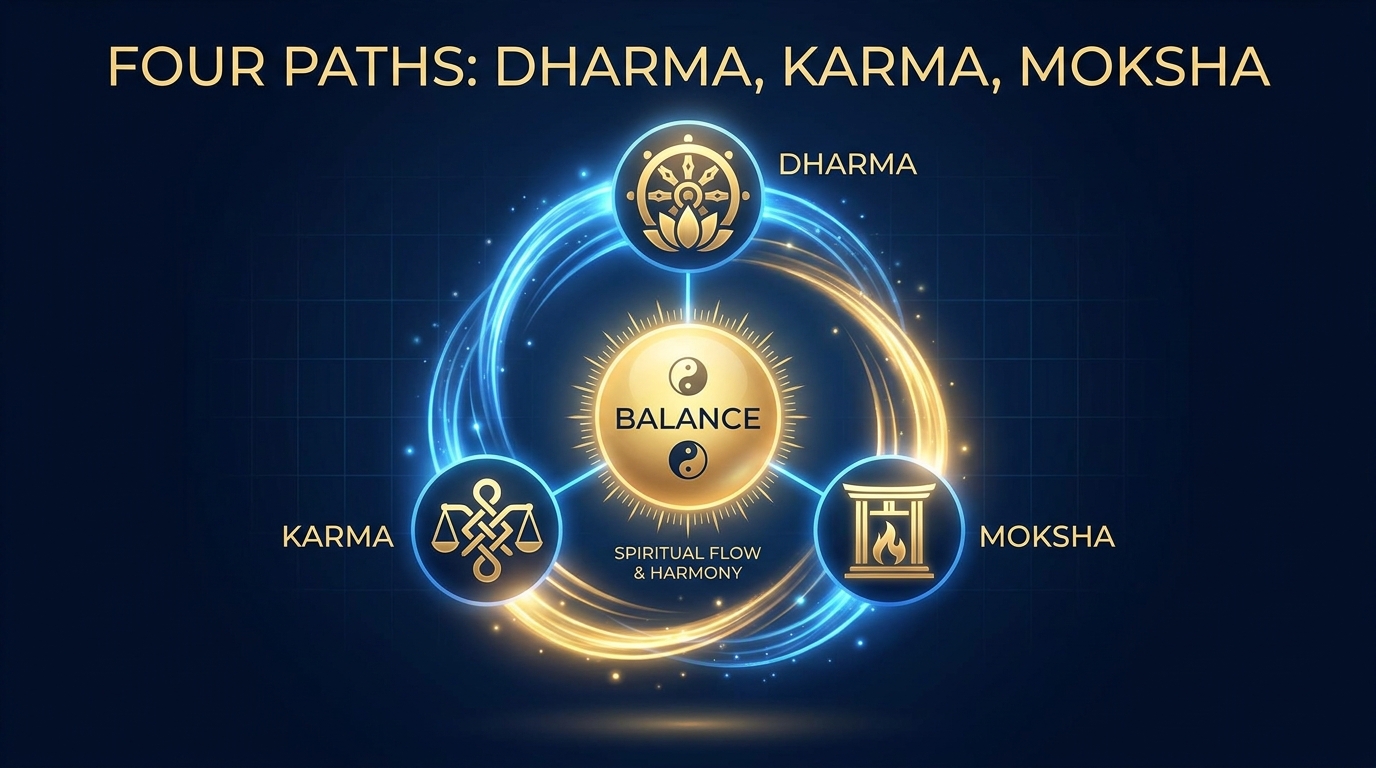
Sanatan Dharma is built on a set of core principles that guide how a person should live, think, and act. These principles are not strict rules but natural laws that help maintain balance in life. Understanding them makes it easier to apply Sanatan Dharma in a practical way.
Dharma
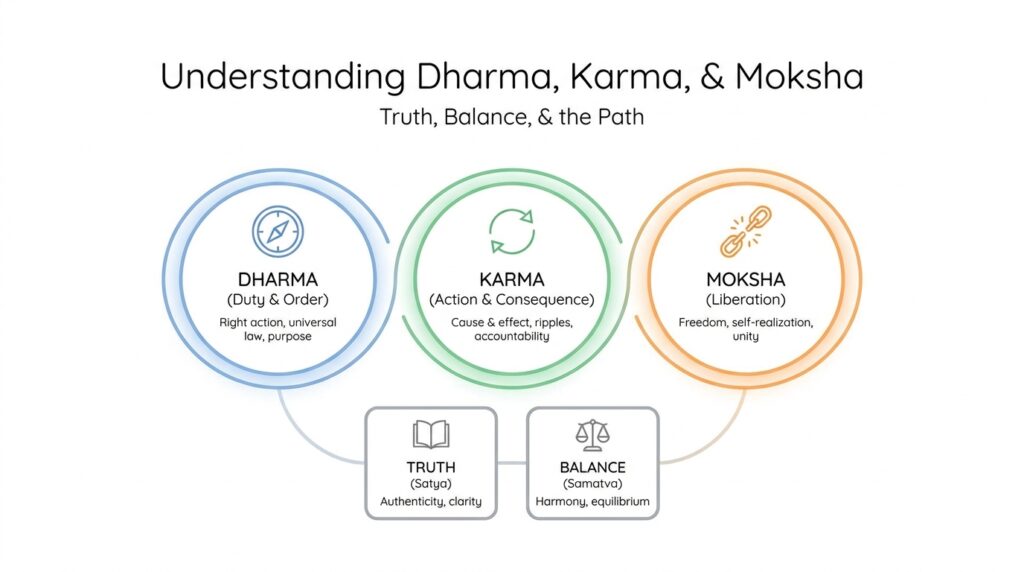
Dharma refers to duty, responsibility, and righteousness. It is about doing what is right according to your role and situation in life. Dharma is not the same for everyone. A student, a parent, and a professional all have different responsibilities, and fulfilling them honestly is considered following Dharma.
For example, a student’s Dharma is to focus on learning and discipline, while a parent’s Dharma is to care for and guide their family. When people follow their Dharma sincerely, it creates order and harmony in society.
Karma
Karma means action and its consequences. Every action you take—whether physical, mental, or verbal—creates an effect. Good actions lead to positive outcomes, while negative actions bring challenges.
This principle teaches accountability. Instead of blaming external situations, it encourages individuals to understand that their present condition is influenced by past actions. At the same time, it empowers people to improve their future by making better choices now.
For example, consistent hard work and honesty in a job often lead to growth and respect, while carelessness and dishonesty can create problems over time.
Moksha
Moksha refers to liberation or freedom from the cycle of birth and death. It is considered the ultimate goal of life in Sanatan Dharma. However, Moksha is not just about what happens after life—it also represents inner freedom.
A person moving toward Moksha seeks to go beyond attachment, ego, and constant desires. This does not mean leaving life behind, but understanding it more deeply and living without unnecessary stress and dependency.
For example, a person who remains calm and balanced even in difficult situations is moving closer to this state of inner freedom.
Reincarnation
Reincarnation is the belief that the soul is eternal and takes multiple births. Life is seen as a continuous journey where the soul learns and evolves over time.
This concept is closely connected with Karma. Actions in one life influence future experiences. It encourages people to think long-term and act responsibly, knowing that every action has lasting effects.
For example, developing good habits, discipline, and positive thinking contributes to growth not just in the present but in the long journey of the soul.
Truth and Ahimsa
Truth (Satya) and non-violence (Ahimsa) are fundamental values in Sanatan Dharma. Truth means being honest in thoughts, words, and actions. Ahimsa means avoiding harm—not just physically, but also through speech and intention.
Living truthfully builds trust and clarity, while practicing non-violence creates peace within and around you. These values are not limited to extreme situations; they apply in everyday life.
For example, speaking honestly even when it is difficult, or choosing calm communication instead of anger, are simple ways of practicing these principles.
Balance
Balance is a key idea that connects all principles of Sanatan Dharma. Life is not about extremes but about maintaining harmony between different aspects—work and rest, material success and spiritual growth, action and reflection.
Sanatan Dharma does not reject the material world, nor does it demand complete detachment. Instead, it teaches how to live in the world while staying mentally and emotionally balanced.
For example, working hard for success while also taking time for self-care, family, and inner growth reflects this balance.
Concept of God in Sanatan Dharma
In Sanatan Dharma, the idea of God is both simple and deeply philosophical. At the highest level, God is understood as Brahman—the ultimate reality that is infinite, formless, and beyond human limitations. Brahman is not a person or a single being but the universal consciousness that exists in everything. It is the source of all creation and the force that sustains the universe.
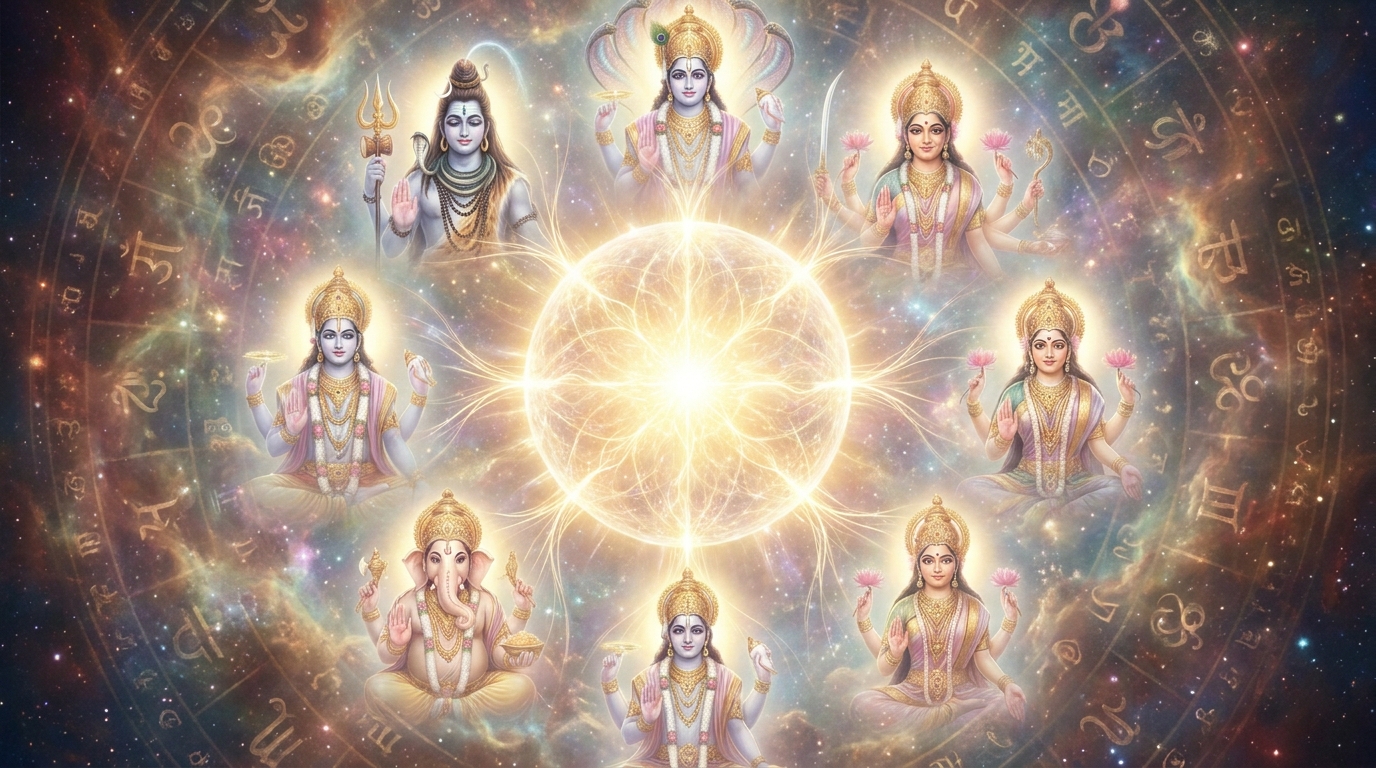
Because Brahman is formless and difficult to understand directly, Sanatan Dharma allows the same ultimate reality to be expressed in many forms. This is why you see different gods and goddesses. These forms are not separate or competing powers but different representations of the same universal truth. Each form highlights a specific quality, such as strength, wisdom, protection, or compassion.
This idea creates unity in diversity. Even though there are many deities, the underlying belief is that all are connected to one supreme reality. This allows individuals to choose a form of God that they feel most connected to, without rejecting other forms. It creates flexibility and inclusiveness rather than restriction.
Devotion, or bhakti, plays an important role in this system. Instead of forcing intellectual understanding, Sanatan Dharma encourages a personal relationship with the divine. A person may connect with God through prayer, chanting, meditation, or simple faith. The focus is not on proving God’s existence but on experiencing a sense of connection, trust, and inner peace.
In simple terms, Sanatan Dharma teaches that God is both one and many—one in essence, many in expression. This allows people with different mindsets and preferences to follow their own path while staying connected to the same universal truth.
Why So Many Gods in Sanatan Dharma
The presence of many gods in Sanatan Dharma often creates confusion, especially for beginners. However, this diversity has a clear and logical explanation.
First, the different gods are symbolic representations of various aspects of life and nature. For example, some represent knowledge, some represent strength, and others represent protection or prosperity. These symbols make it easier for people to understand complex ideas and connect with them emotionally.
Second, these forms can be seen as different expressions of energy. Just as electricity can power different devices in different ways, the same universal energy can appear in different forms depending on its function. Each deity represents a specific type of energy or quality that exists in the universe.
Another important reason is personal connection. Not everyone relates to the same form or concept of God. Some people feel connected to a calm and peaceful form, while others feel inspired by a powerful and protective form. Sanatan Dharma allows this freedom, so individuals can choose the path that feels natural to them.
This system does not divide people—it supports individuality. All forms ultimately lead back to the same source, which is Brahman. The variety is not confusion; it is a way to make spirituality more accessible and meaningful for everyone.
Daily Life in Sanatan Dharma
Sanatan Dharma is not limited to temples or rituals. It is meant to be lived every day through simple actions, discipline, and awareness. The goal is to create a balanced and mindful lifestyle rather than follow rigid rules.
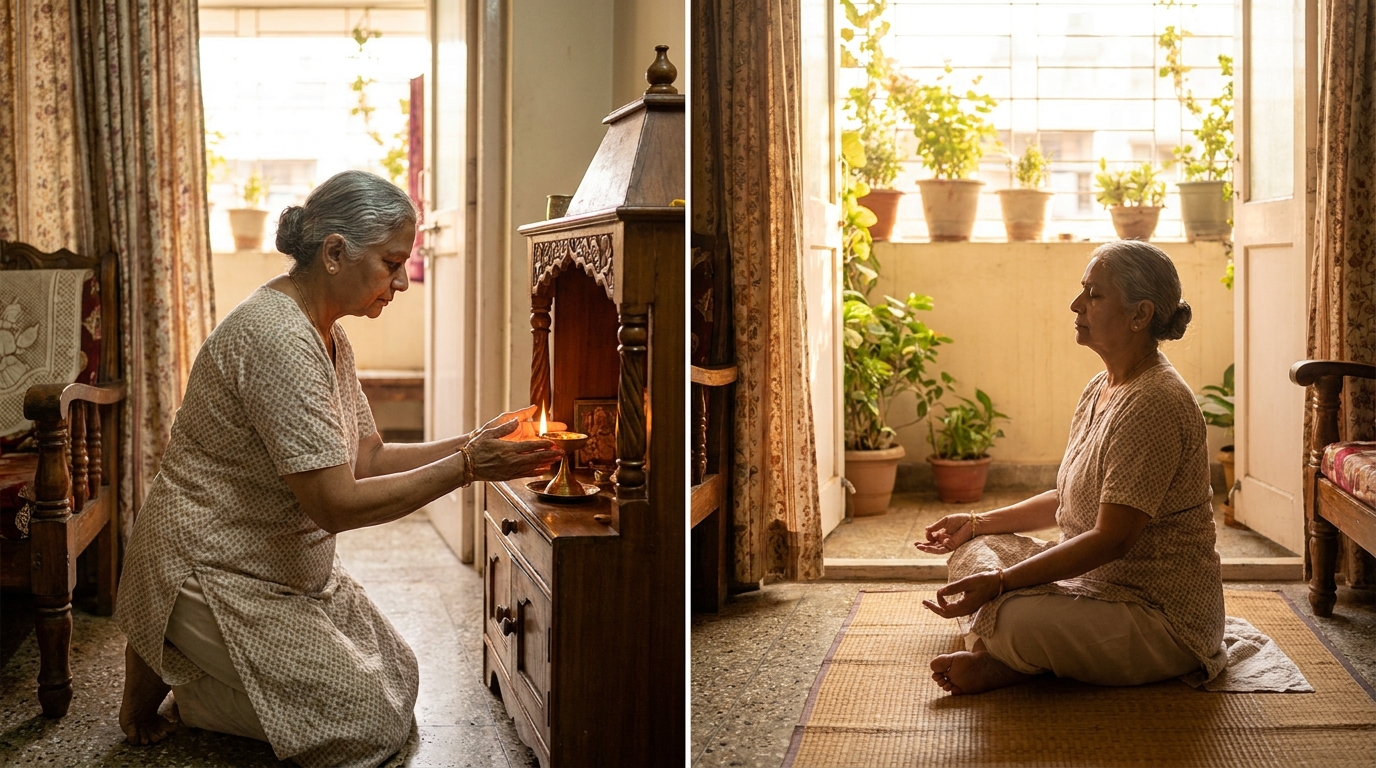
A typical day often begins with a simple morning routine. Waking up early, maintaining cleanliness, and spending a few minutes in silence, prayer, or meditation helps set a positive tone for the day. This quiet time allows the mind to become calm and focused before daily responsibilities begin.
Discipline is a key part of daily life. It includes managing time properly, fulfilling responsibilities sincerely, and maintaining consistency in habits. Discipline is not about restriction but about creating order and stability, which reduces stress and confusion.
Food habits also play an important role. Sanatan Dharma emphasizes mindful eating. This means choosing food that supports physical health and mental clarity. Fresh, balanced, and simple meals are generally preferred. The idea is that what you consume affects not just your body but also your thoughts and energy levels.
Behavior is another important aspect. Respect, honesty, patience, and kindness are considered essential values. How you treat others reflects your inner state. Practicing calm communication and avoiding unnecessary conflict helps maintain harmony in relationships.
Spiritual practices are integrated into daily life in simple ways. These can include chanting, reading sacred texts, meditation, or even silent reflection. The goal is not to perform long or complex rituals but to stay connected with awareness and purpose.
Sanatan Dharma does not demand perfection. Instead, it encourages gradual improvement. Small daily efforts—like staying calm in difficult situations or being mindful of your actions—create long-term positive change.
Science Behind Sanatan Dharma
Many practices in Sanatan Dharma have logical and scientific aspects, even if they are not always explained in modern terms.
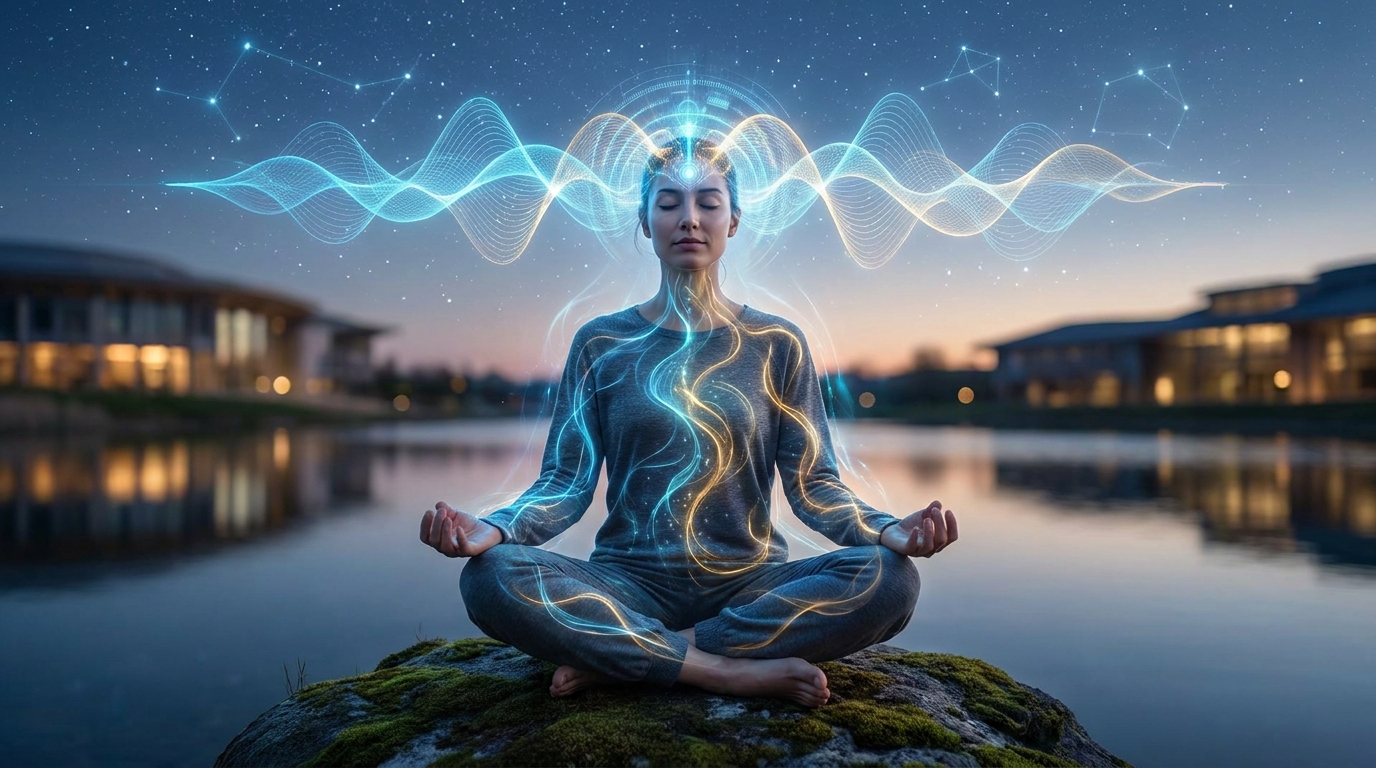
Meditation, for example, has been widely studied and is known to reduce stress, improve focus, and enhance emotional stability. When you sit quietly and observe your thoughts, your mind becomes calmer and more controlled over time. This directly improves mental health and decision-making ability.
Mantras are another important practice. Repeating specific sounds creates vibrations that can influence the mind. These vibrations help improve concentration and bring a sense of rhythm to breathing and thinking. Regular chanting can make the mind more stable and less reactive.
There are also mental benefits to many traditional practices. Following routines, maintaining discipline, and practicing gratitude all contribute to a more balanced and positive mindset. These habits reduce anxiety and improve overall well-being.
Even rituals, which may appear purely symbolic, often have practical logic behind them. They create structure, bring focus, and encourage mindfulness. Performing actions with awareness helps train the mind to stay present rather than distracted.
Sanatan Dharma does not separate spirituality from logic. Instead, it combines both, allowing practices to support not just belief but also mental clarity and emotional balance.
Common Misconceptions
Sanatan Dharma is often misunderstood, especially by those who are new to the topic. These misconceptions usually arise from surface-level understanding or lack of proper explanation.
One of the most common misconceptions is that Sanatan Dharma believes in “too many gods.” This creates confusion and leads people to think it is a fragmented system. In reality, the concept is based on one ultimate truth expressed in many forms. The different deities represent various qualities and energies, not separate or competing powers. Once this idea is understood, the confusion naturally disappears.
Another misconception is that Sanatan Dharma promotes blind faith. In fact, it encourages questioning, understanding, and personal experience. Ancient teachings repeatedly emphasize self-realization rather than blind acceptance. People are not forced to believe something without understanding it. Instead, they are guided to explore and verify through their own awareness and practice.
Rituals are also often misunderstood. Many people assume that rituals are the most important part of Sanatan Dharma, or that they must be performed perfectly to have any value. However, rituals are meant to support focus and discipline—they are tools, not the goal. Without understanding their purpose, rituals can feel mechanical. But when done with awareness, they help create structure and mindfulness in daily life.
These misconceptions exist mainly because people see only the outer layer. When you look deeper, Sanatan Dharma reveals itself as a flexible, thoughtful, and practical system of living.
Why Sanatan Dharma is Still Relevant Today
In today’s fast-paced and stressful world, the principles of Sanatan Dharma are more relevant than ever. Modern life often brings constant pressure, distractions, and mental overload. In such situations, the teachings of balance, discipline, and awareness provide a strong foundation for stability.
Stress has become a common part of daily life. Sanatan Dharma addresses this by encouraging practices like meditation, self-reflection, and controlled thinking. These practices help calm the mind and reduce unnecessary anxiety. Instead of reacting to every situation, a person learns to respond with clarity.
Mental health is another area where these teachings are highly valuable. By focusing on positive actions, controlled thoughts, and emotional balance, Sanatan Dharma helps individuals develop a stable mindset. It teaches that inner peace comes from understanding and managing one’s own thoughts rather than trying to control external situations.
Discipline is also a key aspect. In a world full of distractions, maintaining consistency and focus has become difficult. The daily practices and routines suggested in Sanatan Dharma help build structure and improve productivity. Small habits practiced regularly lead to long-term improvement.
The connection with modern life is strong because the principles are universal. They do not depend on time or place. Whether someone lives in a traditional setting or a modern city, the ideas of balance, responsibility, and self-awareness remain equally useful.
How to Start Following Sanatan Dharma
Starting with Sanatan Dharma does not require complex rituals or major changes. The best approach is to begin with simple and practical steps that can be followed consistently.
First, focus on understanding rather than memorizing. Take time to learn basic concepts like Dharma, Karma, and balance in life. When you understand the purpose behind these ideas, it becomes easier to apply them naturally.
Second, create a small daily routine. This can be as simple as spending a few minutes in silence, practicing meditation, or reading a small section of a spiritual text. The goal is not to do everything at once but to build consistency over time.
Third, pay attention to your actions and behavior. Try to act with honesty, patience, and awareness in daily situations. Even small changes, like controlling anger or speaking calmly, are part of following Sanatan Dharma.
Fourth, avoid overcomplicating the process. Many beginners feel overwhelmed because they think they need to follow strict rules or perform detailed rituals. In reality, simple and mindful living is enough to begin.
Consistency is the most important factor. Practicing small habits daily is far more effective than doing something intense occasionally. Over time, these small efforts create noticeable changes in mindset, behavior, and overall life quality.

Conclusion
Sanatan Dharma is not just an ancient concept but a practical guide for living a balanced and meaningful life. It teaches timeless principles such as responsibility, awareness, discipline, and inner growth. Unlike rigid systems, it allows flexibility and encourages individuals to find their own path based on understanding and experience.
Throughout this blog, we explored its meaning, history, core principles, and relevance in modern life. We also addressed common misconceptions and saw how simple practices can be applied in daily routines. The key takeaway is that Sanatan Dharma is not about complexity—it is about clarity and consistency.
You do not need to make drastic changes to begin. Start with small steps, stay consistent, and focus on understanding your actions and thoughts. Over time, these efforts will naturally bring more balance, focus, and peace into your life.
The journey of Sanatan Dharma is personal and gradual. What matters most is not how much you do, but how sincerely and consistently you follow the path.
FAQs on Sanatan Dharma
1. What is Sanatan Dharma in simple words
Sanatan Dharma is an eternal way of living based on truth, balance, and natural laws. It teaches how to live a meaningful, disciplined, and peaceful life.
2. Is Sanatan Dharma same as Hinduism
They are closely related but not exactly the same. Hinduism is a modern term, while Sanatan Dharma refers to the original, timeless principles and way of life behind it.
3. Can anyone follow Sanatan Dharma
Yes, anyone can follow Sanatan Dharma. It is not limited to a specific group or community. It focuses on universal values that apply to all human beings.
4. How to start following Sanatan Dharma
Start with simple steps like understanding basic principles, practicing honesty, maintaining discipline, and spending a few minutes daily in meditation or reflection.
5. Why is it called eternal
It is called eternal because its principles are timeless and not created at a specific point in history. They are believed to always exist and remain relevant in every era.
6. Does Sanatan Dharma have a founder
No, Sanatan Dharma does not have a single founder. It developed over time through the knowledge and experiences of ancient sages.
7. Is Sanatan Dharma a religion or a way of life
It is often described as a way of life because it includes daily habits, values, and spiritual practices, not just beliefs or rituals.
8. What are the main principles of Sanatan Dharma
The main principles include Dharma (duty), Karma (action), Moksha (liberation), truth, non-violence, and maintaining balance in life.
9. Why are there many gods in Sanatan Dharma
The many gods represent different qualities and forms of the same ultimate reality. They make it easier for people to connect with spiritual concepts.
10. Do we need to perform rituals to follow Sanatan Dharma
No, rituals are optional. The focus is on understanding, awareness, and right actions. Simple daily practices are enough to begin.
11. How does Sanatan Dharma help in daily life
It helps improve discipline, reduce stress, build strong values, and create a balanced and focused mindset.
12. What is the goal of life in Sanatan Dharma
The ultimate goal is Moksha, which means freedom from ignorance and inner limitations, leading to peace and self-realization.
13. Is meditation important in Sanatan Dharma
Yes, meditation is an important practice. It helps calm the mind, improve focus, and develop inner awareness.
14. Can beginners easily understand Sanatan Dharma
Yes, beginners can start with simple concepts and gradually deepen their understanding. It does not require advanced knowledge to begin.
15. Is Sanatan Dharma relevant in modern life
Yes, its principles of balance, discipline, and mental clarity are highly useful in today’s fast and stressful world.