
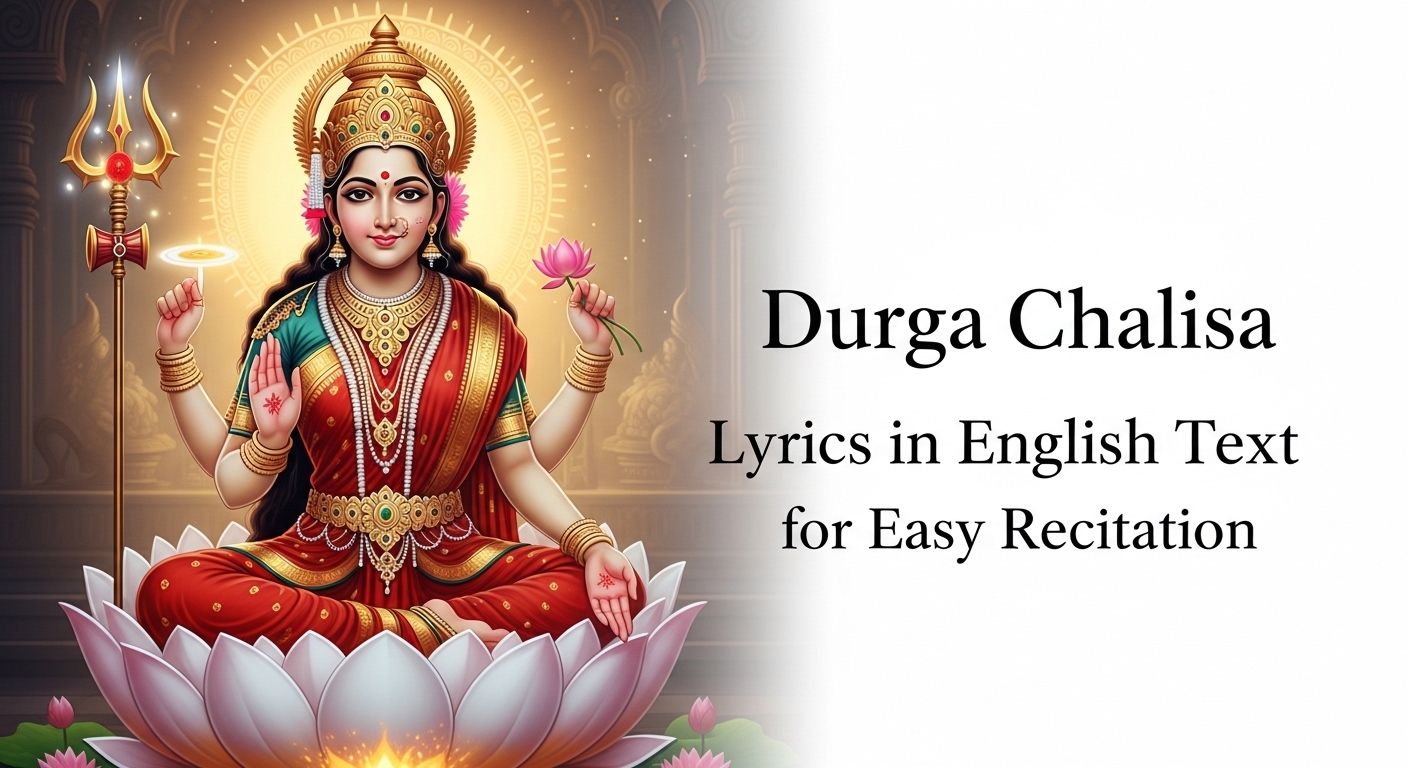
Goddess Durga, also known as Shakti or Devi, is revered as the supreme mother and protector in Hinduism. She symbolizes power, courage, and divine energy, protecting devotees from evil and negativity. One of the most popular devotional hymns dedicated to her is the Durga Chalisa, a forty-verse prayer praising her glory and compassion.
Reciting the Durga Chalisa daily or during Navratri is believed to bring spiritual strength, courage, prosperity, and protection from obstacles. This guide provides the full Durga Chalisa lyrics in English transliteration for easy recitation.
What is Durga Chalisa?
The Durga Chalisa is a devotional hymn that glorifies Goddess Durga’s powers, her triumph over demons, and her benevolence toward devotees. Each verse extols her courage, wisdom, and divine presence. Regular recitation is believed to remove negative energies, instill confidence, and provide spiritual upliftment.
Namo Namo Durge Sukh Karni
Namo Namo Ambe Dukh Harni
Nirankar Hai Jyoti Tumhari
Tihu Lok Phale Ujiyari
Shashi Lalat Mukh Mahavishala
Naitra Lal Brukuti Vikrala
Roop Matu Ko Adhik Suhavey
Darash Karat Jan Ati Sukhpavay
Namo Namo Durge Sukh Karni
Namo Namo Ambe Dukh Harni
Tum Sansar Shakti Lai Kina
Paalan Hetu Ann Dhan Dina
Annpoorna Hui Jag Paala
Tum Hi Aadi Sundari Baala
Namo Namo Durge Sukh Karni
Namo Namo Ambe Dukh Harni
Pralaykaal Sab Naashana Haari
Tum Gauri Shiv Shankar Pyari
Shiv Yogi Tumharey Gun Gavey
Brahma Vishnu Tumhe Nit Dhyavey
Namo Namo Durge Sukh Karni
Namo Namo Ambe Dukh Harni
Roop Saraswati Ko Tum Dhaara
De Subuddhi Rishi Muni Na Ubaara
Dhara Roop Narsinha Ko Amba
Pargat Bhayee Phaad Kar Khamba
Namo Namo Durge Sukh Karni
Namo Namo Ambe Dukh Harni
Raksha Kar Prahlad Bachayo
Hirnakush Ko Swarg Pathayo
Lakshmi Roop Dharo Jag Mahi
Shri Narayan Ang Samahi
Namo Namo Durge Sukh Karni
Namo Namo Ambe Dukh Harni
Shirsindhu Mein Karat Vilaasa
Dayasindhu Deejay Maan Aasa
Hinglaaj Mein Tumhi Bhavani
Mahima Amit Na Jaat Bakhani
Namo Namo Durge Sukh Karni
Namo Namo Ambe Dukh Harni
Maatangi Aru Dhumavati Mata
Bhunvenshwari Bagla Sukh Daata
Shri Bhairav Tara Jag Taarini
Chhin Bhaal Bhav Dukh Nivarini
Namo Namo Durge Sukh Karni
Namo Namo Ambe Dukh Harni
Kehar Vaahan Soh Bhavani
Laangur Veer Chalat Agvaani
Kar Mein Khappar Khadag Virajey
Jaako Dekh Kaal Dar Bhaajey
Namo Namo Durge Sukh Karni
Namo Namo Ambe Dukh Harni
Sohay Astra Aur Hai Trishula
Jaatey Uthat Shatru Hi Ya Shoola
Nagarkoti Mein Tumhi Virajat
Tihu Lok Mein Danka Baajat
Namo Namo Durge Sukh Karni
Namo Namo Ambe Dukh Harni
Shumbh Ni Shumbh Daanav Tum Maarey
Rakt Beej Shankhan Saunhaarey
Mahishasur Nrup Ati Abhimaani
Jehi Agh Bhaar Mahi Akulani
Namo Namo Durge Sukh Karni
Namo Namo Ambe Dukh Harni
Roop Karaal Kali Ka Dhaara
Sen Sahit Tum Tihi Saunhaara
Pari Gaadh Santan Par Jab Jab
Bhayee Sahay Maatu Tum Tab Tab
Namo Namo Durge Sukh Karni
Namo Namo Ambe Dukh Harni
Amarpuri Aru Baasav Loka
Tab Mahima Sab Rahe Ashoka
Jwaala Mein Hai Jyoti Tumhari
Tumhe Sada Pujey Nar Nari
Namo Namo Durge Sukh Karni
Namo Namo Ambe Dukh Harni
Prem Bhakti Se Jo Yash Gaavey
Dukh Daaridra Nikat Nahi Aavey
Dhyavey Tumhe Jo Nar Maan Laye
Janam Maran Taako Chuti Jaai
Namo Namo Durge Sukh Karni
Namo Namo Ambe Dukh Harni
Jogi Sur Muni Kahat Pukari
Yog Na Ho Bin Shakti Tumhari
Shankar Aacharaj Tap Kino
Kaam Aru Krodh Jiti Sab Lino
Namo Namo Durge Sukh Karni
Namo Namo Ambe Dukh Harni
Nishdin Dhyan Dharo Shankar Ko
Kaahu Kaal Nahi Sumiro Tumko
Shakti Roop Ko Maram Na Paayo
Shakti Gayi Tab Maan Pachtaayo
Namo Namo Durge Sukh Karni
Namo Namo Ambe Dukh Harni
Sharnagat Hui Kirti Bakhaani
Jai Jai Jai Jagdamb Bhavani
Bhayi Prasan Aadi Jagdamba
Dai Shakti Nahi Kin Vilamba
Namo Namo Durge Sukh Karni
Namo Namo Ambe Dukh Harni
Moko Maatu Kasht Ati Ghero
Tum Bin Kaun Harey Dukh Mero
Aasha Trishna Nipat Satavey
Moham Dadik Sab Vin Shaabey
Namo Namo Durge Sukh Karni
Namo Namo Ambe Dukh Harni
Shatru Naash Keejay Maharani
Sumiro Ikchit Tumhe Bhavani
Karo Krupa Hey Maatu Dayala
Riddhi Siddhi Dey Karahu Nihala
Namo Namo Durge Sukh Karni
Namo Namo Ambe Dukh Harni
Jab Lagi Jiyo Dayafal Paau
Tumharo Yash May Sada Sunau
Durga Chalisa Jo Neet Gaavey
Sab Sukh Bhog Param Padh Paavey
Devidas Sharan Nij Jaani
Karahu Kripa Jagdamb Bhavani
Namo Namo Durge Sukh Karni
Namo Namo Ambe Dukh Harni
Sharangat Raksha Kare Bhakt Rahe Nishank
Main Aaya Teri Sharan Mein
Maatu Lijeeye Ank.
Significance of Reciting Durga Chalisa
Protection from Evil: Reciting the Chalisa invokes Durga’s blessings to remove negative energies and safeguard the household.
Spiritual Strength: Daily recitation enhances courage, determination, and confidence in facing challenges.
Mental Peace: It helps reduce stress, fear, and anxiety, bringing calmness to the mind.
Prosperity and Success: Devotees believe it attracts wealth, health, and overall prosperity.
Devotion and Bhakti: Recitation deepens the spiritual connection with Goddess Durga, fostering faith and humility.
How to Recite Durga Chalisa
Best Days: Especially recited during Navratri, Tuesdays, and Fridays, but it can be recited any day.
Timing: Early morning or evening is ideal.
Place: Sit in a clean and quiet place, preferably in front of a Durga idol or image.
Offerings: Light a lamp, incense, and offer flowers, fruits, or sweets.
Method: Chant slowly with devotion, focusing on the meaning of each verse.
Consistency: Daily recitation of 1-3 times strengthens spiritual benefits and divine blessings.
Benefits of Daily Recitation
Protection from accidents, enemies, and evil influences.
Healing emotional pain and reducing mental stress.
Gaining spiritual knowledge, wisdom, and confidence.
Receiving Goddess Durga’s blessings for personal and professional growth.
Cultivating patience, devotion, and moral strength.
Conclusion
The Durga Chalisa is more than a prayer; it is a source of strength, protection, and spiritual empowerment. Whether recited daily or during festive seasons like Navratri, it helps devotees overcome obstacles, gain inner peace, and strengthen their faith in Goddess Durga.
By chanting these forty powerful verses in English, even those unfamiliar with Hindi can connect deeply with the goddess and experience her blessings.
FAQs
1. What is Durga Chalisa?
Durga Chalisa is a forty-verse devotional hymn dedicated to Goddess Durga, praising her courage, divine energy, and benevolence toward devotees.
2. Who can recite Durga Chalisa?
Anyone with devotion to Goddess Durga can recite the Chalisa. It is suitable for adults and children who wish to seek her blessings for protection, courage, and prosperity.
3. What are the benefits of reciting Durga Chalisa daily?
Daily recitation removes negative energies, brings mental peace, strengthens devotion, provides protection, and attracts success in life.
4. When is the best time to recite Durga Chalisa?
Early morning or evening is ideal. It is also especially recited during Navratri, Tuesdays, and Fridays.
5. How many times should Durga Chalisa be recited?
Chanting it once daily is beneficial. For stronger spiritual effects, reciting 3 times or completing a 21-day or 40-day cycle is recommended.
6. Can Durga Chalisa remove obstacles in life?
Yes. Devotees believe that regular recitation invokes Goddess Durga’s blessings to remove obstacles in career, health, education, and personal life.
7. What offerings are recommended while reciting Durga Chalisa?
Traditionally, devotees light a ghee lamp, offer flowers, incense, fruits, and sweets, and sit in front of a Durga idol or image during recitation.
8. Can Durga Chalisa help during Navratri?
Yes. Reciting Durga Chalisa during Navratri enhances devotion, spiritual energy, and blessings from Goddess Durga, helping devotees overcome obstacles.
9. Is Durga Chalisa available in English?
Yes. The Chalisa is available in English transliteration, allowing devotees who don’t read Hindi to recite it easily while retaining its meaning and spiritual impact.
10. Where can I listen to or learn Durga Chalisa?
Durga Chalisa can be recited at home or temples. Many online platforms, apps, and YouTube channels provide audio, video, and textual versions for easy learning and recitation.