Indra Jatra is one of the most vibrant and culturally rich festivals of Nepal, celebrated primarily in Kathmandu. Dedicated to Lord Indra, the Hindu god of rain and king of heaven, the festival marks the end of the monsoon season and the beginning of the harvest period. Indra Jatra is not only a religious event but also a showcase of traditional music, dance, and cultural performances.
The festival reflects the harmonious blend of Hindu and Newar culture, observed with devotion, community gatherings, and elaborate rituals. It is especially famous for its chariot processions, masked dances, and cultural displays, which attract locals and tourists alike.
History of Indra Jatra
Indra Jatra has a history that dates back several centuries, deeply rooted in the Newar culture of the Kathmandu Valley. According to legend, the festival was initiated to honor Lord Indra, the god of rain, for providing fertility and abundance to the land.
The festival also commemorates King Pratap Malla, who contributed to establishing many traditions of Indra Jatra. Over the years, it evolved into a major cultural event, combining religious rituals, folk dances, and public festivities that celebrate both Hindu and Newar heritage.
Significance of Indra Jatra
Indra Jatra holds multiple layers of significance:
Religious Significance: The festival is dedicated to Lord Indra, seeking his blessings for rain, prosperity, and protection from natural calamities.
Agricultural Importance: Celebrated at the end of the monsoon season, it signifies the preparation for the harvest period.
Cultural Unity: Indra Jatra unites different communities, especially the Newars, in a collective celebration of heritage and tradition.
Tourism and Heritage: The festival showcases Kathmandu’s rich cultural heritage and attracts visitors from around the world.
Duration of Indra Jatra
Indra Jatra is celebrated over eight days, with each day featuring specific rituals and activities. The main celebrations typically include:
Chariot Processions: Chariots of deities, particularly Living Goddess Kumari, are paraded through Kathmandu streets.
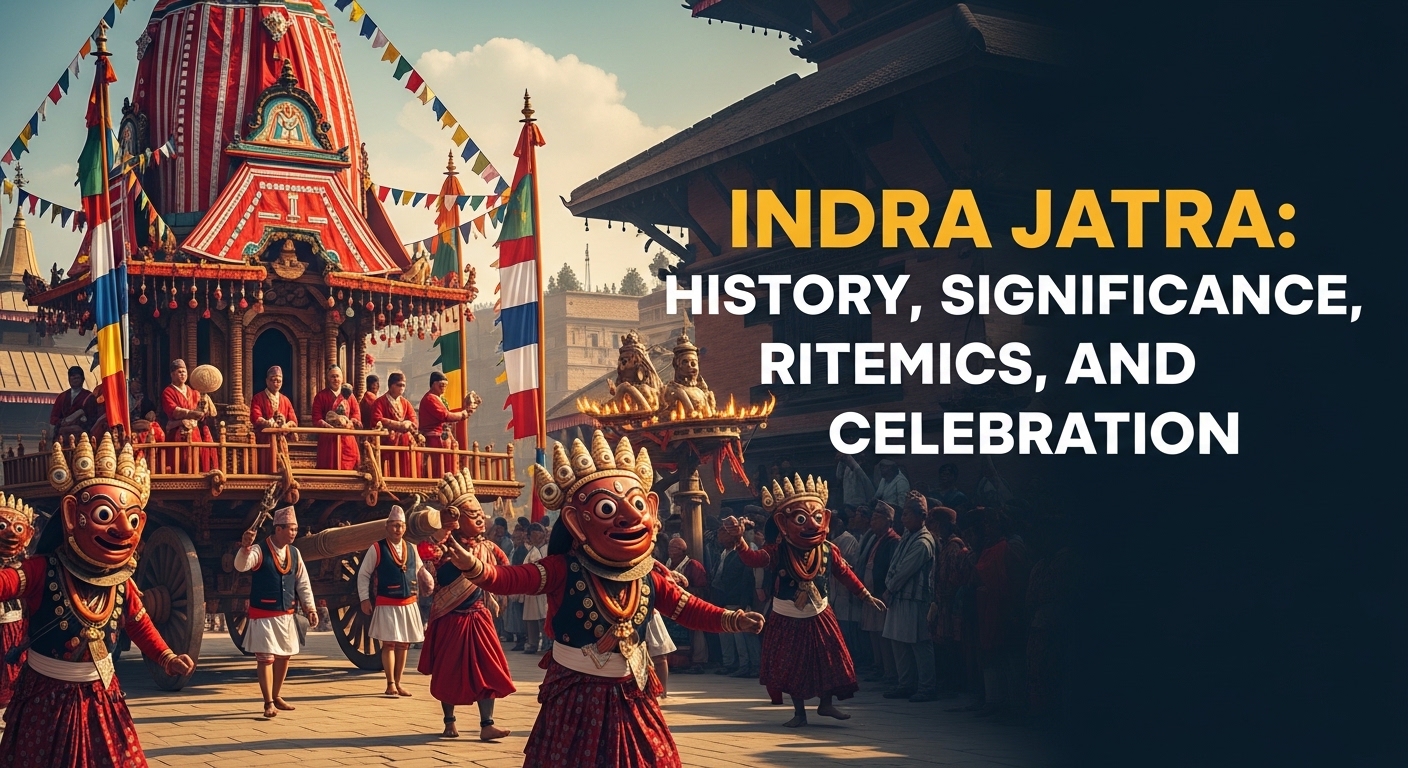
Masked Dances: Traditional masked dances like Lakhey Dance are performed to ward off evil spirits and entertain devotees.
Cultural Programs: Folk performances, music, and storytelling highlight the history and culture of the Kathmandu Valley.
Key Rituals of Indra Jatra
1. Kumari Jatra (Living Goddess Procession)
The highlight of Indra Jatra is the Kumari Jatra, where the Living Goddess Kumari is taken in a chariot procession through the streets of Kathmandu. Devotees gather along the route to seek her blessings, and the city comes alive with music, chanting, and festive energy.
2. Lakhey Dance
The Lakhey Dance is a traditional masked dance performed during the festival. The dancers wear demon masks and vibrant costumes, performing intricate steps to rhythmical drumbeats. This dance symbolizes the triumph of good over evil and wards off negative energies.
3. Bhairab and Indra Chariots
Chariots of deities like Bhairab and Indra are pulled by devotees through the streets. The chariots are beautifully decorated with flowers, fabrics, and lights. People participate actively in pulling the chariots as an act of devotion and collective celebration.
4. Religious Offerings and Prayers
Devotees offer flowers, fruits, and prayers to Lord Indra and other associated deities. Temples in Kathmandu are adorned with decorations, and priests perform special rituals to invoke blessings for prosperity, good rainfall, and health.
5. Cultural and Social Gatherings
Indra Jatra is also a time for social interaction. Communities organize fairs, cultural shows, and exhibitions showcasing traditional Newar art, music, and dance. Street performances, local cuisine, and handicrafts add to the festive atmosphere.
Cultural Significance
Indra Jatra is more than a religious festival; it is a celebration of Kathmandu’s cultural identity. It preserves centuries-old traditions, folklore, and performing arts of the Newar community. The festival also emphasizes:
Community Bonding: Residents participate collectively in processions, dances, and preparations, strengthening communal harmony.
Preservation of Heritage: Traditional music, dance, and rituals are passed down through generations, keeping cultural heritage alive.
Religious Devotion: Through prayers and offerings, devotees maintain their spiritual connection with Lord Indra and other deities.
Modern-Day Celebrations
Today, Indra Jatra is not only a religious and cultural festival but also a tourist attraction. Visitors from around the world come to witness the vibrant processions, masked dances, and the Living Goddess Kumari. Modern celebrations include:
Photography and Media Coverage: Extensive media and social platforms cover the event, highlighting Kathmandu’s culture globally.
Cultural Workshops: Some organizations host workshops on traditional dance, music, and mask-making during the festival.
Interfaith Participation: People of different faiths and communities participate, enjoying the cultural richness of Kathmandu.
FAQs About Indra Jatra Festival
1. What is Indra Jatra?
Indra Jatra is a traditional festival of Kathmandu, Nepal, celebrated to honor Lord Indra, the god of rain, and to mark the end of the monsoon season.
2. Why is the Living Goddess Kumari important in Indra Jatra?
The Living Goddess Kumari symbolizes purity and divine blessings. Her chariot procession is the highlight of the festival, and devotees seek her blessings for health and prosperity.
3. What are Lakhey Dances in Indra Jatra?
Lakhey Dances are traditional masked dances performed to entertain, ward off evil spirits, and celebrate the triumph of good over evil.
4. How long is Indra Jatra celebrated?
Indra Jatra is celebrated over eight days, with various rituals, chariot processions, and cultural events taking place each day.
5. What is the cultural significance of Indra Jatra?
The festival preserves Kathmandu’s cultural heritage, fosters community bonding, and showcases traditional music, dance, and folklore.
6. Who participates in Indra Jatra?
Residents of Kathmandu, especially the Newar community, participate actively. Devotees, tourists, and cultural enthusiasts also take part in processions and festivities.
7. When is Indra Jatra celebrated?
Indra Jatra is celebrated in the month of Bhadra (August–September) according to the Nepali lunar calendar, after the monsoon season ends.