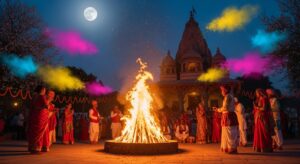
As the joyous spirit of Holi slowly subsides, and the vivid splashes of color fade into memory, the lingering fragrance of abir and gulal signals the continuation of the festive season. Following the exuberance of Holi, another sacred festival emerges—Bhai Dooj. This festival celebrates the pure, spiritual, and eternal love between brothers and sisters. While Holi fills life with the colors of joy and camaraderie, Bhai Dooj strengthens that bond with blessings, prayers, and intimate family rituals.
Bhai Dooj is a festival that beautifully intertwines religious traditions with human emotions. It is a day when siblings reaffirm their love, protection, and commitment to one another, creating memories that last a lifetime.
A Confluence of Religion and Affection
Bhai Dooj is also known as Bhratri Dwitiya and Yama Dwitiya. It is celebrated on the second day of the bright fortnight (Shukla Paksha) of the lunar month of Chaitra. The term “Dwitiya” signifies the second day of the lunar cycle, considered particularly auspicious for family and spiritual observances. This day carries a special energy, emphasizing the bond of love and mutual respect between brothers and sisters.
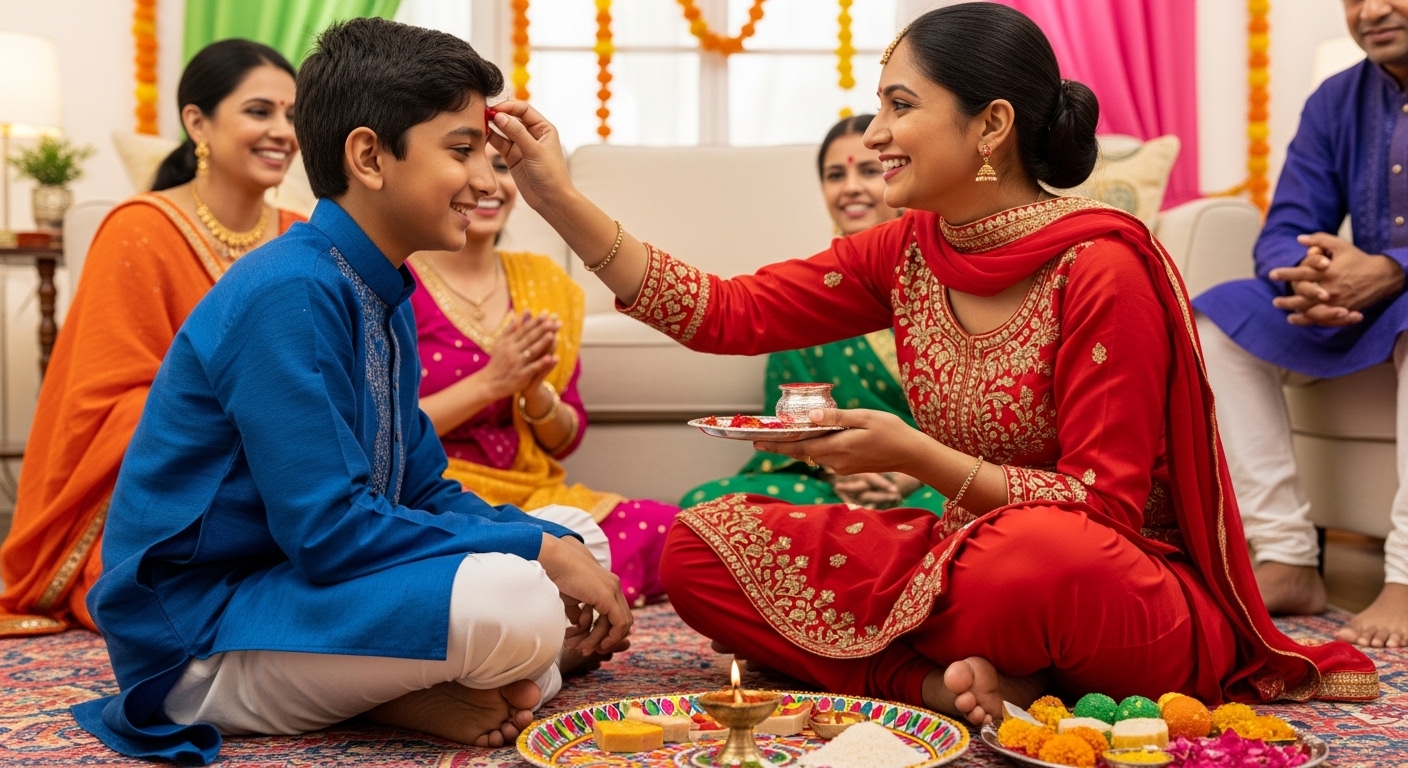
In Sanatan Dharma, a sister is viewed as a motherly figure. Just as a mother prays for the well-being of her children, on Bhai Dooj, a sister prays for her brother’s long life, health, and prosperity. Through the symbolic tilak—a sacred mark often made with roli (rice flour), turmeric, and accompanied by rice grains—and the ceremonial lamp, she blesses her brother and expresses her deep affection. The rituals serve as a reminder that familial bonds are divinely protected and spiritually significant.
The Mythological Significance of Bhai Dooj
The origins of Bhai Dooj are deeply rooted in Hindu mythology. One of the most widely recounted legends involves Yamraj, the god of death, and his sister Yamuna. According to tradition, Yamraj was deeply devoted to his sister, but due to his responsibilities, he could not meet her for a long time. On a particular day, Yamuna invited her brother to her home. She welcomed him with a warm ceremony, performed aarti, applied tilak on his forehead, and offered him a lavish feast.
Impressed and moved by his sister’s love and devotion, Yamraj granted her a divine boon: that any brother who visits his sister’s home on this day and receives tilak from her would be blessed with long life, happiness, and prosperity. This story forms the foundation of Bhai Dooj and highlights the festival as a celebration of enduring familial love, protection, and spiritual blessing.
Another legend associates Bhai Dooj with Lord Krishna and his sister Subhadra. After Krishna defeated the demon Narakasura, Subhadra welcomed him with ceremonial rituals and blessings, symbolizing the bond between siblings and the protection sisters wish upon their brothers.
How Bhai Dooj Is Celebrated
Bhai Dooj is observed with joy, devotion, and traditional customs. While specific rituals may vary across regions, the essence of the festival remains constant: celebrating the love, respect, and protection between brothers and sisters.
1. Tilak and Aarti
The festival begins with bathing in the morning and preparing a decorated puja plate. Sisters place roli, rice grains, a ceremonial lamp, and sweets on the plate. At an auspicious time, the brother is seated on a decorated seat, and the sister applies the tilak on his forehead. This is followed by aarti, symbolically warding off negative energies and invoking divine protection. The tilak signifies blessings, prosperity, and spiritual well-being.
2. Chanting and Prayers
In many households, sisters chant mantras and prayers while performing the tilak ceremony. They wish their brothers the fulfillment of the four goals of life: Dharma (righteousness), Artha (prosperity), Kama (desires), and Moksha (spiritual liberation). These prayers emphasize that a brother’s life is not only safeguarded but also aligned with spiritual and moral principles.
3. Sweets and Festive Dishes
Food plays an important role in Bhai Dooj celebrations. Sisters prepare special dishes such as Gujiya, Malpua, Kheer, and Puri, offering them to their brothers as a token of love and care. Sharing these meals strengthens familial bonds and expresses gratitude for each other’s presence in life.
4. Gifts and Blessings
After the tilak ceremony and prayers, brothers give gifts to their sisters, expressing their love and appreciation. Gifts may range from traditional items to modern presents, but the intention behind the gesture is always love, respect, and gratitude. The exchange of gifts reinforces the mutual promise of protection and support.
Regional Variations of Bhai Dooj
Bhai Dooj is celebrated across India under different names and traditions, yet the central theme of sibling love remains universal.
- North India: Known as Bhai Dooj or Bhratri Dwitiya, it is celebrated with tilak, aarti, prayers, sweets, and gift exchanges. Family reunions are an integral part of the day.
- Maharashtra and Goa: Referred to as Bhau Beej, sisters perform similar rituals and pray for their brothers’ well-being.
- West Bengal: Celebrated as Bhai Phonta, the sister applies a phonta (tilak) after fasting, accompanied by rituals and mantras.
- Nepal: Known as Bhai Tika, it coincides with the five-day Tihar festival. Sisters apply multi-colored tika on their brothers’ foreheads and draw protective circles around them, blessing their brothers with health, prosperity, and protection.
Despite regional differences, Bhai Dooj consistently emphasizes the sacred bond, love, and duty shared between siblings.
Emotional and Social Significance
Bhai Dooj is more than just a ceremonial tradition—it strengthens the emotional fabric of families. In today’s fast-paced world, when siblings often live apart due to education or work, the festival becomes a time to reconnect, express love, and share memories.
The day provides a platform for emotional renewal. Sisters express their concern and affection through prayers and blessings, while brothers acknowledge the guidance, support, and unconditional love of their sisters. Bhai Dooj encourages forgiveness, reconciliation, and the nurturing of lifelong bonds.
Spiritual Symbolism of Bhai Dooj
The rituals of Bhai Dooj carry profound spiritual meaning. The tilak applied on the brother’s forehead is symbolic of the Ajna Chakra, the center of wisdom, intuition, and spiritual awakening. Through this mark, sisters invoke divine protection and elevate their brothers’ spiritual consciousness.
The aarti performed during the ceremony represents the dispelling of darkness and negativity. The light of the lamp symbolizes knowledge, clarity, and the divine presence in one’s life. Through these symbolic acts, Bhai Dooj becomes a celebration of both familial love and spiritual devotion.
Modern Celebrations of Bhai Dooj
In contemporary times, Bhai Dooj has adapted to modern lifestyles without losing its core essence. In urban settings, families may simplify rituals due to time constraints, yet the emotional and spiritual significance remains intact. Gifts have diversified, and celebrations may include outings or online exchanges for siblings living far apart.
Digital communication enables brothers and sisters separated by distance to connect, perform virtual tilak ceremonies, and share blessings. Social media also amplifies the festival, with siblings posting heartfelt messages, videos, and greetings to mark the occasion.
Values Promoted by Bhai Dooj
Bhai Dooj highlights several important values central to family and society:
- Love and loyalty: Strengthens familial bonds and mutual trust.
- Respect and gratitude: Encourages appreciation of siblings’ presence and support.
- Spiritual protection: Combines prayer with rituals to invoke divine blessings.
- Unity and harmony: Resolves conflicts and promotes reconciliation.
- Cultural continuity: Preserves ancient traditions and ensures their passage to future generations.
Through these values, Bhai Dooj not only celebrates sibling relationships but also nurtures societal harmony and emotional resilience.
Conclusion
Bhai Dooj is a festival of affection, devotion, and spiritual symbolism. It is an occasion to honor the sacred bond between brothers and sisters, marked by rituals, prayers, sweets, and gifts. The tilak ceremony, aarti, and blessings are more than customs—they are expressions of love, protection, and lifelong commitment.
The festival reminds us that beyond material exchanges, the greatest gift siblings can offer one another is their care, guidance, and unwavering support. As sisters pray for their brothers’ health, prosperity, and happiness, and brothers reaffirm their promise to protect their sisters, Bhai Dooj becomes a celebration of family, culture, and timeless love.
May every Bhai Dooj inspire siblings to cherish each other, uphold the bonds of trust and affection, and continue the legacy of love, respect, and protection across generations.