
Pradosh Vrat is one of the most revered fasting rituals in Hinduism, dedicated to Lord Shiva, the destroyer of evil and the supreme protector of the universe. This vrat is observed on the 13th day (Trayodashi) of both the waxing (Shukla Paksha) and waning (Krishna Paksha) lunar phases each month. Devotees observe a fast and perform special evening rituals, known as Pradosh Kaal Puja, to seek Shiva’s blessings for prosperity, spiritual growth, health, and the removal of obstacles.
The fast holds special significance in Shaivism, the tradition devoted to Lord Shiva, and is considered highly auspicious for anyone seeking divine guidance and protection.
Significance of Pradosh Vrat
Pradosh Vrat is much more than just a fasting ritual. It is a spiritual practice that connects devotees with cosmic energies and the divine grace of Lord Shiva. Here’s why this vrat is so important:
1. Worship of Lord Shiva
Lord Shiva is known as Mahadev, the supreme god who removes fear, negativity, and obstacles from life. By observing Pradosh Vrat, devotees offer their devotion and gratitude to Shiva, reinforcing their spiritual connection with the divine.
2. Cosmic Energy of Pradosh Kaal
The twilight period of the Pradosh Kaal, which begins about 1.5 hours before sunset and continues for 1 hour after sunset, is considered highly auspicious. This is when Shiva is believed to be most receptive to the prayers of devotees, and worship during this period is said to bring amplified benefits.
3. Removal of Sins and Past Karmas
Pradosh Vrat is believed to cleanse the devotee of past karmas. Observing the fast with sincerity and performing rituals during Pradosh Kaal can purify the mind, body, and soul, offering spiritual merit and liberation from negative influences.
4. Fulfillment of Desires
Devotees also observe Pradosh Vrat to seek specific blessings such as:
- Relief from health issues
- Success in education or career
- Prosperity in business
- Protection from accidents and dangers
- Harmony in relationships
When is Pradosh Vrat Observed?
Pradosh Vrat is observed twice each month:
- Shukla Paksha Pradosh: Falls during the waxing phase of the moon.
- Krishna Paksha Pradosh: Falls during the waning phase of the moon.
The 13th day of the lunar fortnight (Trayodashi) is considered highly favorable for worshiping Shiva. Special Pradosh days, such as those falling on Saturday (Shani Pradosh) or Monday (Som Pradosh), carry extra spiritual significance.
Importance of Special Pradosh Days
1. Shani Pradosh (Saturday)
When Pradosh falls on a Saturday, devotees believe it helps reduce the malefic effects of Shani (Saturn). It is considered ideal for overcoming delays, obstacles, and difficulties in career or personal life.
2. Som Pradosh (Monday)
Pradosh observed on Monday is considered auspicious for enhancing health, spiritual growth, and inner strength. It strengthens the connection with Lord Shiva and brings calmness to the mind.
Benefits of Observing Pradosh Vrat
Observing Pradosh Vrat offers spiritual, mental, and physical benefits. Here are the key advantages:
1. Spiritual Growth
Fasting and performing evening prayers cultivate devotion, self-discipline, and focus. Devotees develop a stronger connection with Lord Shiva, enhancing their spiritual awareness.
2. Removal of Obstacles
Pradosh Vrat is believed to help overcome obstacles in career, relationships, health, and other areas of life. By invoking Shiva’s blessings, devotees gain courage and strength to face challenges.
3. Mental Peace and Emotional Balance
The fast encourages mindfulness, meditation, and prayer. This practice reduces stress, fear, and anxiety, leading to greater inner peace and emotional stability.
4. Health Benefits
Abstaining from heavy or processed foods during Pradosh Vrat improves digestion, detoxifies the body, and promotes discipline in eating habits. Many devotees experience better energy levels and improved focus.
5. Prosperity and Success
Devotees believe that observing Pradosh Vrat brings success in studies, business, and personal endeavors. Regular worship attracts positive energies, opportunities, and prosperity.
6. Protection from Negative Influences
Reciting mantras and performing Pradosh Kaal Puja is believed to shield devotees from evil spirits, accidents, and other negative energies.
How to Observe Pradosh Vrat
Step 1: Fasting Guidelines
- Avoid grains, meat, alcohol, and processed foods.
- Some devotees follow nirjala fasting (without water), while others consume fruits, milk, or light vegetarian meals.
- The fast is usually broken after the completion of evening rituals.
Step 2: Pradosh Kaal Puja
The most auspicious time for worship is Pradosh Kaal, about 1.5 hours before sunset. Steps include:
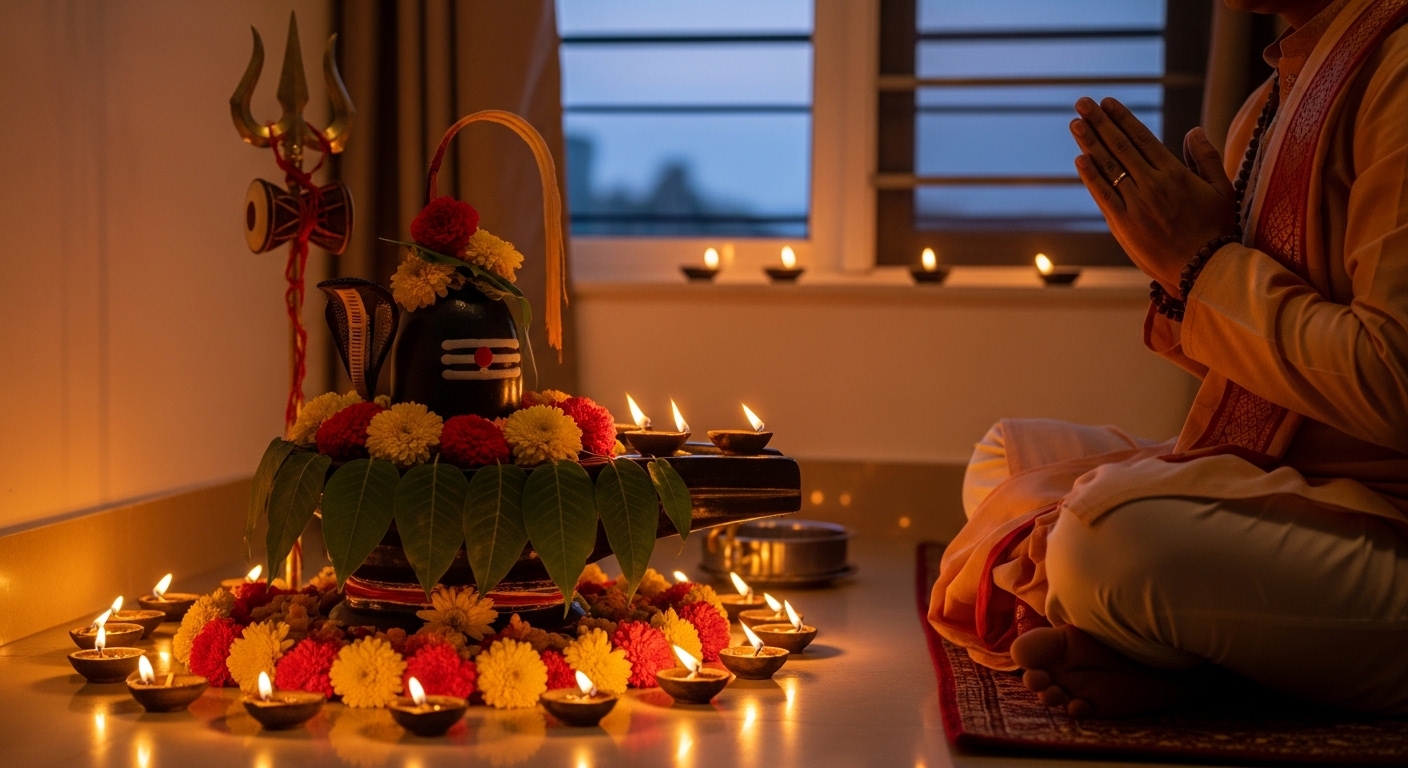
- Clean the puja area and decorate with flowers and diya lamps.
- Place a Shiva Lingam or image of Lord Shiva.
- Offer bilva leaves, fruits, milk, water, and flowers to the deity.
- Recite Maha Mrityunjaya Mantra, Om Namah Shivaya, or Shiva Chalisa.
- Perform Aarti and circumambulate the Shiva Lingam.
Step 3: Charity and Good Deeds
- Donate food, clothes, or essentials to the needy.
- Acts of compassion are considered highly meritorious and multiply the benefits of the fast.
Recommended Mantras for Pradosh Vrat
- Om Namah Shivaya – A basic mantra invoking Lord Shiva’s blessings.
- Maha Mrityunjaya Mantra – “Om Tryambakam Yajamahe Sugandhim Pushtivardhanam…” for protection and longevity.
- Shiva Chalisa – Forty-verse prayer praising Lord Shiva.
Chanting these mantras with devotion during Pradosh Kaal enhances the spiritual potency of the vrat.
Special Rituals and Practices
- Lighting Lamps: Place ghee lamps near the Shiva Lingam or image during Pradosh Kaal.
- Offering Bilva Leaves: Bilva leaves are considered sacred and must be offered in odd numbers.
- Chanting Mantras: Devotees often chant 108 repetitions of Om Namah Shivaya or other Shiva mantras.
- Prayers for Family and Health: Special prayers can be offered for family well-being, recovery from illness, and removal of obstacles.
Pradosh Vrat in Festivals
Pradosh Vrat holds additional significance when it coincides with festivals such as:
- Maha Shivaratri – The vrat becomes highly auspicious during this night dedicated to Lord Shiva.
- Navratri – Some Pradosh days overlap with Navratri celebrations, combining the blessings of Shiva and Goddess Durga.
Common Questions About Pradosh Vrat
- Can women observe Pradosh Vrat?
Yes, both men and women can observe the fast with devotion and sincerity. - Is it mandatory to fast without water?
No. Devotees can choose to fast partially, consuming fruits, milk, or light vegetarian meals if full fasting is difficult. - Can Pradosh Vrat fulfill wishes?
Yes, many devotees believe sincere fasting and prayers can bring success, health, and prosperity. - Which day of the week is most auspicious?
Saturday (Shani Pradosh) and Monday (Som Pradosh) are considered highly favorable. - Can I recite mantras at home?
Yes. The rituals can be performed at home or in temples with devotion.
Experiences of Devotees
Many devotees have shared experiences of life-changing blessings after observing Pradosh Vrat:
- Overcoming chronic health issues.
- Success in exams and professional endeavors.
- Resolution of family disputes and improved relationships.
- Removal of financial difficulties and obstacles in business.
Conclusion
Pradosh Vrat is a sacred observance that combines fasting, prayer, and charity to honor Lord Shiva. It is a time for purification, spiritual reflection, and divine connection. By observing the fast, performing Pradosh Kaal Puja, chanting mantras, and practicing good deeds, devotees invite Lord Shiva’s blessings into their lives.
Whether observed monthly, weekly, or on special Pradosh days, this vrat strengthens faith, removes obstacles, and promotes spiritual and material prosperity. Observing Pradosh Vrat consistently is considered a path toward peace, protection, and fulfillment of desires.