
In the rich spiritual traditions of India, certain monthly observances hold deep religious and cultural importance. Among them, Masik Karthigai and Anvadhan are revered rituals connected with devotion, purification, sacred fire ceremonies, and spiritual discipline. These observances continue to guide devotees toward inner peace, gratitude, and harmony with cosmic energies.
For many families, these occasions are not merely rituals but opportunities to reconnect with ancient traditions, strengthen faith, and seek divine blessings. Whether performed at home or in temples, these observances are rooted in Vedic wisdom and continue to inspire generations.
This article explores the meaning, significance, rituals, benefits, and spiritual symbolism associated with Masik Karthigai and Anvadhan in a simple and engaging way.
What Is Masik Karthigai?
Masik Karthigai is a monthly Hindu observance celebrated on the day when the Karthigai star aligns during each lunar month. It is especially significant in South India, particularly in Tamil spiritual traditions.
The observance is closely associated with:
- Lord Murugan (Kartikeya)
- Sacred fire and light
- Spiritual cleansing
- Family well-being
- Removal of negative energies
Devotees light oil lamps, perform prayers, visit temples, and observe fasting practices to seek divine grace and prosperity.
Spiritual Importance of Masik Karthigai
Masik Karthigai symbolizes the victory of light over darkness. Lighting lamps during this observance is believed to remove ignorance, ego, and negativity from one’s life.
The ritual also reflects:
- Purification of the mind and soul
- Awakening of spiritual consciousness
- Strengthening of family bonds
- Expression of gratitude to divine energies
- Cultivation of discipline and devotion
Many devotees believe that worship performed on this day brings peace, courage, and protection from obstacles.
Connection With Lord Murugan
Lord Murugan is the central deity associated with Masik Karthigai. According to Hindu mythology, Lord Murugan was born from divine sparks of fire emitted by Lord Shiva. These sparks were nurtured by the six Krittika maidens, giving rise to the connection between the Karthigai star and Murugan worship.
Devotees offer:
- Flowers
- Fruits
- Sandal paste
- Lamps
- Sacred hymns
- Milk abhishekam
Special prayers are conducted in Murugan temples where large gatherings participate in devotional singing and lamp-lighting ceremonies.
Rituals Performed During Masik Karthigai
Lighting Sacred Lamps
The most important ritual is the lighting of traditional oil lamps at home entrances, prayer rooms, and temple premises. Lamps symbolize divine wisdom and positive energy.
Many households light rows of clay lamps in the evening while chanting prayers dedicated to Lord Murugan.
Fasting and Prayer
Some devotees observe partial or full fasting as an act of spiritual purification. Fasting is believed to improve mental clarity and deepen devotion.
Prayers usually include:
- Murugan mantras
- Kanda Sashti Kavacham
- Devotional songs
- Temple visits
Temple Worship
Temples dedicated to Lord Murugan witness special rituals, processions, and offerings during Masik Karthigai. Devotees gather to seek blessings for health, prosperity, and success.
Charity and Food Offerings
Offering food to the needy and feeding devotees is considered highly auspicious. Acts of charity performed on this day are believed to multiply positive karma.
What Is Anvadhan?
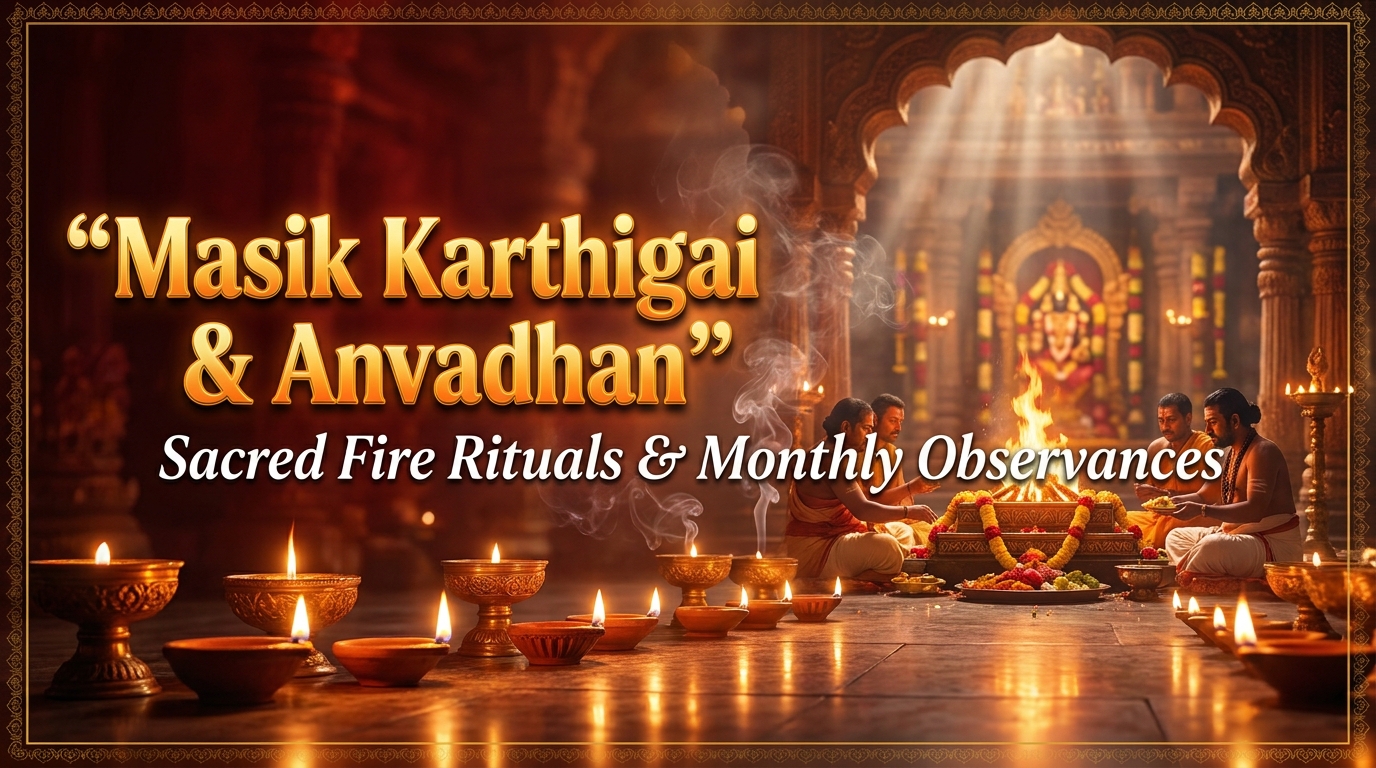
Anvadhan is a traditional Vedic observance connected with sacred fire rituals known as yajnas or homas. The term refers to the preparation or rekindling of sacred fires before important Vedic ceremonies.
In ancient Vedic culture, fire was considered a divine messenger carrying offerings to celestial beings. Anvadhan represents spiritual renewal, discipline, and continuity of sacred traditions.
The observance is especially important for families and priests who maintain Vedic fire rituals as part of their religious practices.
Spiritual Meaning of Anvadhan
Anvadhan is deeply symbolic in Vedic spirituality. Fire represents:
- Purity
- Divine presence
- Transformation
- Knowledge
- Sacrifice
The ritual reminds devotees of the importance of self-discipline, inner cleansing, and spiritual responsibility.
Sacred fire ceremonies are believed to:
- Purify the environment
- Remove negative influences
- Promote harmony
- Invoke divine blessings
- Strengthen spiritual energy
Sacred Fire Rituals in Hindu Tradition
Fire rituals have existed in Hindu culture for thousands of years. In Vedic philosophy, fire acts as a bridge between humans and divine realms.
Common fire rituals include:
- Homa
- Yajna
- Agnihotra
- Havans
During Anvadhan, sacred fire is carefully prepared using traditional methods and accompanied by Vedic chants.
Offerings may include:
- Ghee
- Herbs
- Rice
- Sesame
- Sandalwood
- Sacred leaves
Each offering carries symbolic meaning and is believed to create positive vibrations.
Importance of Fire in Spiritual Practices
The sacred fire is not viewed merely as a physical flame. It represents divine consciousness and spiritual illumination.
Many spiritual seekers believe that participating in fire rituals helps:
- Calm the mind
- Improve focus
- Release emotional burdens
- Enhance spiritual awareness
- Create positive energy within the home
The sound vibrations from Vedic chants combined with the fire ritual are considered highly purifying.
Traditional Observances Associated With Anvadhan
Cleansing Rituals
Participants often begin with bathing and purification practices before approaching the sacred fire.
Chanting of Vedic Hymns
Priests recite ancient Vedic mantras during the ceremony. These chants are believed to invoke divine energies and sanctify the surroundings.
Offerings to Sacred Fire
Offerings placed into the fire symbolize surrender of ego, desires, and negativity.
Community Participation
In many traditional settings, families and communities gather together for collective prayers and rituals, strengthening social and spiritual bonds.
Benefits of Observing Masik Karthigai and Anvadhan
Many devotees believe these observances bring both spiritual and emotional benefits.
Inner Peace
The calm atmosphere created through prayers, lamps, and rituals promotes mental peace and emotional balance.
Positive Energy
Sacred chants and fire rituals are traditionally believed to cleanse negative vibrations from homes and surroundings.
Spiritual Discipline
Regular observance encourages mindfulness, devotion, and self-control.
Family Harmony
Participating together in prayers and rituals often strengthens family unity and cultural connection.
Preservation of Tradition
These observances help preserve ancient spiritual practices and pass them to future generations.
Symbolism of Lamps and Fire
Both Masik Karthigai and Anvadhan revolve around the symbolism of light and fire.
Light as Knowledge
Lamps represent wisdom overcoming ignorance and truth overcoming confusion.
Fire as Transformation
Sacred fire symbolizes purification and personal transformation. Just as fire transforms offerings into ash and energy, spiritual practices are believed to transform human consciousness.
Removal of Darkness
Darkness in spiritual traditions often symbolizes fear, negativity, and lack of awareness. Lighting lamps signifies hope, guidance, and enlightenment.
Regional Celebrations and Cultural Significance
Masik Karthigai is especially popular in Tamil Nadu and among Tamil communities worldwide. Temples are decorated with rows of lamps, and devotional activities continue throughout the day.
Anvadhan, while more Vedic and ritualistic in nature, remains important among priestly communities and families preserving ancient fire traditions.
These observances contribute significantly to India’s spiritual and cultural heritage.
Role of Temples During These Observances
Temples become centers of spiritual activity during Masik Karthigai and Anvadhan.
Common temple activities include:
- Special pujas
- Abhishekam ceremonies
- Vedic chanting
- Distribution of prasadam
- Lamp-lighting festivals
- Community gatherings
Devotees often visit temples early in the morning or during evening prayer sessions to participate in rituals.
How Families Observe These Rituals at Home
Modern families often adapt these traditions in simple yet meaningful ways.
Home Prayer Setup
A clean prayer space is decorated with flowers and lamps.
Lighting Diyas
Small oil lamps are lit at sunset to invite positivity and divine blessings.
Devotional Singing
Families may chant prayers or listen to devotional music together.
Meditation and Reflection
Many people use the occasion for quiet meditation and gratitude practices.
Importance of Devotion in Hindu Rituals
The true essence of rituals lies not only in external practices but also in inner devotion.
Hindu philosophy emphasizes that sincerity, humility, and faith are more important than elaborate ceremonies. Even simple prayers performed with genuine devotion are considered spiritually powerful.
Masik Karthigai and Anvadhan remind devotees that spiritual growth comes through regular practice, self-awareness, and gratitude.
Eco-Friendly Ways to Celebrate
As awareness about environmental sustainability grows, many devotees now adopt eco-friendly practices while observing rituals.
These include:
- Using clay lamps instead of plastic decorations
- Choosing natural oils and cotton wicks
- Avoiding chemical-based incense
- Using biodegradable offerings
- Minimizing waste during ceremonies
Sustainable celebrations preserve both spiritual values and environmental responsibility.
Relevance of Ancient Rituals in Modern Life
In today’s fast-paced world, ancient observances like Masik Karthigai and Anvadhan continue to provide emotional grounding and spiritual comfort.
These rituals encourage people to:
- Slow down and reflect
- Spend time with family
- Practice gratitude
- Connect with tradition
- Cultivate mindfulness
For many individuals, such observances offer a sense of continuity and cultural identity.
Common Questions About Masik Karthigai and Anvadhan
Why are lamps important in Masik Karthigai?
Lamps symbolize divine wisdom, positivity, and spiritual illumination. Lighting lamps is believed to remove negativity and invite blessings.
Can these observances be performed at home?
Yes, many families perform simple rituals at home through prayers, lamp-lighting, and devotional practices.
Is fasting necessary?
Fasting is optional and depends on individual beliefs and traditions. Many devotees observe fasting as a form of discipline and purification.
What is the significance of sacred fire in Anvadhan?
Sacred fire represents purity, transformation, and communication with divine energies in Vedic tradition.
Are these observances limited to priests?
No, devotees from all backgrounds can participate according to their family traditions and spiritual practices.
Tips for Meaningful Observance
To make the experience spiritually fulfilling, devotees often:
- Maintain cleanliness and purity
- Practice gratitude
- Avoid negative thoughts
- Spend time in prayer or meditation
- Participate with sincerity and devotion
The spiritual atmosphere created through these practices can bring emotional peace and clarity.
Conclusion
Masik Karthigai and Anvadhan continue to hold deep spiritual and cultural significance in Hindu tradition. Rooted in ancient wisdom, these observances symbolize purification, devotion, divine light, and spiritual transformation.
Through lamp-lighting, sacred chants, fire rituals, fasting, and prayer, devotees seek inner peace, protection, and blessings for their families. Beyond rituals, these observances encourage mindfulness, gratitude, discipline, and connection with timeless spiritual values.
Even in modern times, the traditions of Masik Karthigai and Anvadhan remain meaningful pathways for preserving cultural heritage and nurturing spiritual well-being.