
Karma Puja is one of the most sacred tribal festivals celebrated in the states of Jharkhand, Bihar, Odisha, Chhattisgarh, Madhya Pradesh, and parts of West Bengal. Dedicated to Karam Devta, the god of youth, strength, and fertility, this festival is deeply rooted in nature worship. It symbolizes prosperity, brotherhood, and gratitude towards Mother Earth.
The Legends of Karma Puja
Several folk legends are associated with Karma Puja, passed down orally through generations:
- Karam Devta’s Blessing: It is believed that Karam Devta blesses his devotees with wealth, fertility, and protection if properly worshipped, but neglect can bring misfortune.
- The Brothers’ Tale: Stories highlight how devotion to Karma Puja brought prosperity to families, symbolizing unity and mutual support.
- Agricultural Connection: Since tribal life revolves around farming, Karma Puja represents fertility, rain, and the bounty of crops. The Karam tree symbolizes life and growth.
Rituals of Karma Puja
Karma Puja is celebrated with devotion, enthusiasm, and community participation. The rituals include:
Fasting and Preparations
Women, especially married ones, observe fast for family well-being.
Houses are cleaned and decorated with rangoli in preparation for the rituals.
Worship of the Karam Tree
A branch of the sacred Karam tree is brought from the forest.
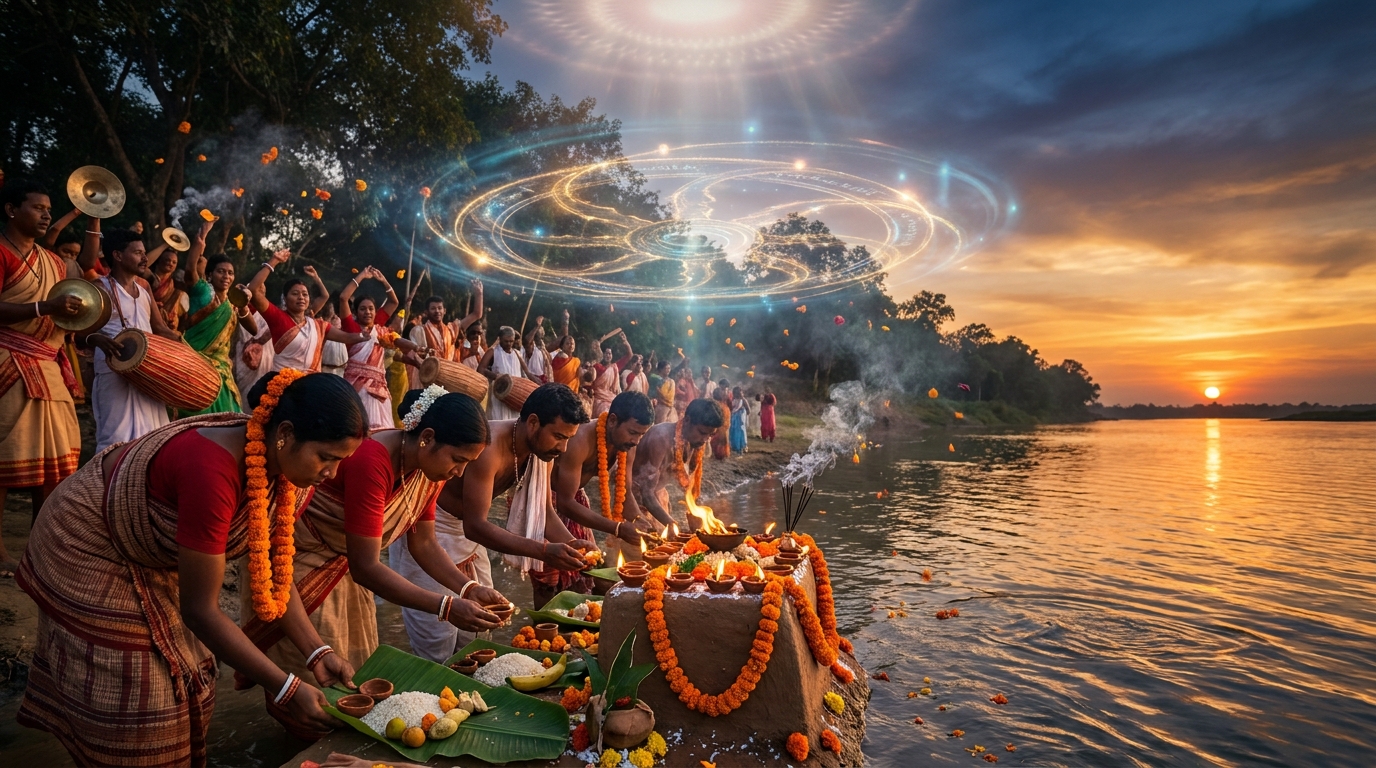
It is planted in the village courtyard and decorated with flowers, rice, milk, and vermilion.
The tree becomes the embodiment of Karam Devta during the puja.
Songs and Dances
Women sing Karma Geet, narrating folk tales and seeking blessings.
Men and women dance around the Karam branch, accompanied by drums (Mandar), flutes, and traditional instruments.
Offerings and Puja
Offerings of rice, fruits, flowers, and Mahua liquor are placed before the deity.
The village priest (Pahan) performs rituals, invoking prosperity and protection.
Community Feast
After rituals, people share a grand feast of rice, pulses, and seasonal vegetables.
The fast is broken, and food is distributed as prasad.
Cultural Significance of Karma Puja
Karma Puja is not merely a ritual but a cultural expression of faith and unity:
- Unity and Brotherhood: The entire village celebrates together, strengthening community ties.
- Nature Worship: It reinforces the tribal belief in trees, rivers, and soil as sacred.
- Women’s Participation: Women play a central role through fasting, singing, and leading the rituals.
- Preservation of Traditions: Folk songs, dances, and oral stories keep tribal heritage alive.
Regional Celebrations of Karma Puja
Jharkhand
The most vibrant celebrations are seen here, with all-night dancing, drumming, and rituals. Schools and workplaces often remain closed in tribal regions.
Bihar
In Bihar, the festival emphasizes family bonding, with sisters praying for their brothers’ happiness and longevity.
Odisha
Tribal groups such as Oraons and Mundas highlight agricultural prosperity during the rituals.
Chhattisgarh
Known for colorful cultural performances, Karma Nacha is a traditional dance performed here with great zeal.
Madhya Pradesh
Celebrations include storytelling, folk dramas, and elaborate rituals in tribal villages.
Modern Relevance of Karma Puja
Even today, Karma Puja holds cultural, spiritual, and ecological significance:
- Eco-friendly Values: The worship of trees and nature reflects environmental awareness.
- Identity and Pride: For tribal communities, it is a powerful marker of cultural identity.
- Spiritual Harmony: The rituals remind people of gratitude, respect, and unity with nature.
Conclusion
Karma Puja is more than just a festival; it is a celebration of life, nature, and community spirit. Through its rituals, songs, dances, and prayers, it unites people in devotion while preserving rich tribal traditions. By honoring Karam Devta and the natural world, devotees seek prosperity, protection, and harmony—values that remain timeless and universal.
FAQs About Karma Puja
Q1. What is the significance of Karma Puja?
Karma Puja is significant because it symbolizes prosperity, fertility, unity, and harmony with nature. It is dedicated to Karam Devta, who is believed to bless his devotees with good harvests, strength, and protection.
Q2. Why is the Karam tree important in Karma Puja?
The Karam tree is considered sacred and is worshipped as the symbol of Karam Devta. It represents life, growth, fertility, and protection. A branch of this tree is used during the puja rituals.
Q3. Who observes fasting during Karma Puja?
Women, especially married women, observe fasting on Karma Puja for the well-being, happiness, and prosperity of their families and communities.
Q4. Which states celebrate Karma Puja?
Karma Puja is mainly celebrated in Jharkhand, Bihar, Odisha, Chhattisgarh, Madhya Pradesh, and some parts of West Bengal by tribal and rural communities.
Q5. How is Karma Puja celebrated?
Karma Puja is celebrated by worshipping the Karam tree branch, singing traditional Karma Geet, dancing around the sacred tree, offering rice and fruits, and sharing a community feast.
Q6. Is Karma Puja related to agriculture?
Yes, Karma Puja has a deep agricultural connection. Tribal communities worship Karam Devta to seek blessings for fertility, rain, and protection of crops.
Q7. What is Karma Nacha in Karma Puja?
Karma Nacha is a traditional dance performed during Karma Puja, especially in Chhattisgarh and Jharkhand, where men and women dance in circles to the beats of drums and folk music.