
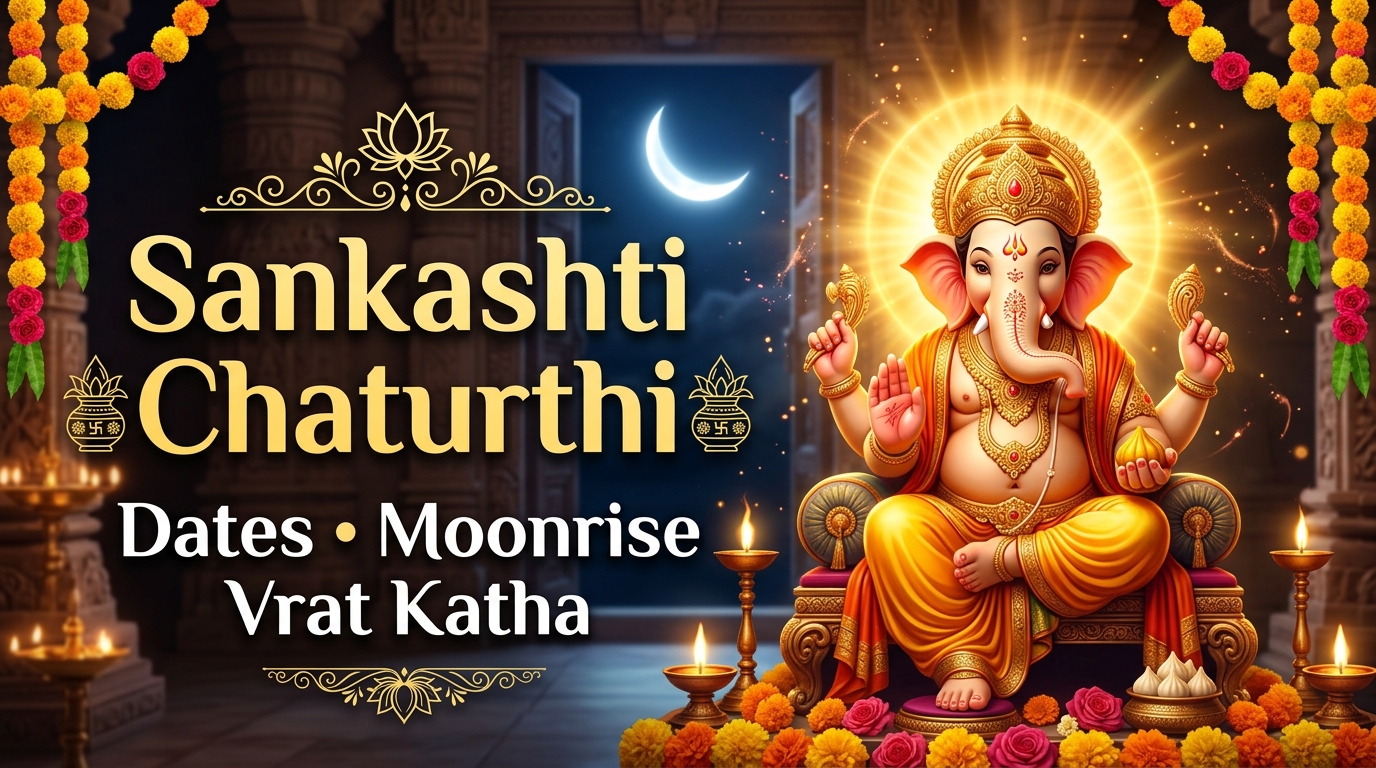
Sankashti Chaturthi is one of the most spiritually significant fasting festivals dedicated to Lord Ganesha. Devotees across India observe this vrat every month to seek blessings for wisdom, prosperity, success, and removal of obstacles. In 2026, Sankashti Chaturthi falls on different dates according to the Hindu lunar calendar, and each month is associated with a unique form of Lord Ganesha.
This detailed guide covers the complete 2026 Sankashti Chaturthi dates, moonrise timings, significance, vrat katha, fasting rituals, benefits, and important observances. Whether you are observing the vrat regularly or planning to begin in 2026, this article will help you understand everything in a simple and authentic way.
What is Sankashti Chaturthi?
Sankashti Chaturthi is observed on the fourth day (Chaturthi) of Krishna Paksha, which is the waning phase of the moon after Purnima (Full Moon). The word “Sankashti” means “deliverance during difficult times.” Devotees worship Lord Ganesha and observe a day-long fast to remove obstacles and difficulties from life.
The vrat is completed only after sighting the moon and offering prayers to Lord Ganesha. Many devotees also listen to or read the Sankashti Vrat Katha during the puja.
Among all Sankashti Chaturthi observances, the one that falls in the Magha month is especially important and is popularly known as Sakat Chauth.
2026 Sankashti Chaturthi Dates and Moonrise Timings
Here is the complete list of Sankashti Chaturthi dates for 2026 according to the local time of Mumbai, India.
January 2026 – Lambodara Sankashti
- Date: Tuesday, January 6, 2026
- Also Known As: Sakat Chauth
- Moonrise Time: 09:28 PM
- Tithi Begins: 08:01 AM, January 6
- Tithi Ends: 06:52 AM, January 7
Lambodara Sankashti is considered highly auspicious for family happiness, prosperity, and child well-being.
February 2026 – Dwijapriya Sankashti
- Date: Thursday, February 5, 2026
- Moonrise Time: 09:54 PM
- Tithi Begins: 12:09 AM, February 5
- Tithi Ends: 12:22 AM, February 6
This vrat is associated with gaining knowledge, wisdom, and positive energy.
March 2026 – Bhalachandra Sankashti
- Date: Friday, March 6, 2026
- Moonrise Time: 09:25 PM
- Tithi Begins: 05:53 PM, March 6
- Tithi Ends: 07:17 PM, March 7
Bhalachandra form of Lord Ganesha symbolizes peace, calmness, and emotional balance.
April 2026 – Vikata Sankashti
- Date: Sunday, April 5, 2026
- Moonrise Time: 09:54 PM
- Tithi Begins: 11:59 AM, April 5
- Tithi Ends: 02:10 PM, April 6
Devotees worship Lord Ganesha to overcome major life obstacles and challenges.
May 2026 – Ekadanta Sankashti
- Date: Tuesday, May 5, 2026
- Moonrise Time: 10:26 PM
- Tithi Begins: 05:24 AM, May 5
- Tithi Ends: 07:51 AM, May 6
Ekadanta represents determination, focus, and spiritual discipline.
June 2026 – Vibhuvana Sankashti
- Date: Wednesday, June 3, 2026
- Moonrise Time: 09:58 PM
- Tithi Begins: 09:21 PM, June 3
- Tithi Ends: 11:30 PM, June 4
This Sankashti is considered beneficial for career growth and mental strength.
July 2026 – Krishnapingala Sankashti
- Date: Friday, July 3, 2026
- Moonrise Time: 09:58 PM
- Tithi Begins: 11:20 AM, July 3
- Tithi Ends: 12:39 PM, July 4
Krishnapingala form is worshipped for protection from negativity and fear.
August 2026 – Gajanana Sankashti
- Date: Sunday, August 2, 2026
- Moonrise Time: 09:43 PM
- Tithi Begins: 11:07 PM, August 1
- Tithi Ends: 11:15 PM, August 2
Gajanana Sankashti is associated with intelligence, wisdom, and prosperity.
Heramba Sankashti 2026
August 31, 2026 – Heramba Sankashti
- Date: Monday, August 31, 2026
- Also Known As: Bahula Chaturthi
- Moonrise Time: 08:57 PM
- Tithi Begins: 08:50 AM, August 31
- Tithi Ends: 07:41 AM, September 1
Heramba Ganesha is worshipped for courage, protection, and family harmony.
September 2026 – Vighnaraja Sankashti
- Date: Tuesday, September 29, 2026
- Moonrise Time: 08:20 PM
- Tithi Begins: 05:09 PM, September 29
- Tithi Ends: 02:55 PM, September 30
This form of Lord Ganesha is known as the king of obstacle removers.
October 2026 – Vakratunda Sankashti
- Date: Thursday, October 29, 2026
- Also Known As: Karwa Chauth
- Moonrise Time: 09:00 PM
- Tithi Begins: 01:06 AM, October 29
- Tithi Ends: 10:09 PM, October 29
Vakratunda Ganesha symbolizes victory over ego and negative forces.
November 2026 – Ganadhipa Sankashti
- Date: Friday, November 27, 2026
- Moonrise Time: 08:59 PM
- Tithi Begins: 09:48 AM, November 27
- Tithi Ends: 06:39 AM, November 28
This vrat is considered beneficial for leadership, confidence, and success.
December 2026 – Akhuratha Sankashti
- Date: Saturday, December 26, 2026
- Moonrise Time: 08:52 PM
- Tithi Begins: 08:04 PM, December 26
- Tithi Ends: 05:12 PM, December 27
Akhuratha Sankashti is believed to bring peace, financial stability, and happiness.
Importance of Moonrise on Sankashti Chaturthi
Moonrise timing holds great significance during Sankashti Chaturthi fasting. Devotees observe a strict fast throughout the day and break the fast only after:
- Seeing the moon
- Offering Arghya (water offering) to the moon
- Performing Lord Ganesha puja
- Listening to the Sankashti Vrat Katha
This ritual symbolizes gratitude, discipline, and spiritual purification.
Sankashti Chaturthi Vrat Vidhi
The fasting ritual is simple but spiritually powerful. Here is the traditional method followed by devotees.
Morning Rituals
- Wake up early before sunrise
- Take a bath and wear clean clothes
- Clean the puja area
- Take a vow (Sankalp) for the vrat
Puja Materials Required
- Idol or image of Lord Ganesha
- Durva grass
- Modak or laddoo
- Incense sticks
- Flowers
- Coconut
- Fruits
- Diya and camphor
Evening Puja Procedure
- Light a diya before Lord Ganesha
- Offer flowers and Durva grass
- Chant Ganesh mantras
- Read or listen to Sankashti Vrat Katha
- Perform Aarti
- Wait for moonrise
- Offer water to the moon
- Break the fast after completing prayers
Sankashti Chaturthi Vrat Katha
According to Hindu scriptures, once the gods and devotees were facing continuous problems and obstacles. They prayed to Lord Ganesha for help. Lord Ganesha advised them to observe Sankashti Chaturthi vrat with full devotion and sincerity.
Those who observed the vrat experienced relief from suffering, financial troubles, illness, and obstacles. Since then, devotees have continued this tradition for blessings, prosperity, wisdom, and success.
The vrat katha emphasizes faith, patience, discipline, and devotion toward Lord Ganesha.
Benefits of Observing Sankashti Chaturthi Fast
Many devotees believe that observing Sankashti Chaturthi regularly brings spiritual and practical benefits.
1. Removal of Obstacles
Lord Ganesha is known as Vighnaharta, the remover of obstacles. The vrat helps devotees overcome challenges in personal and professional life.
2. Mental Peace
Fasting and prayer create emotional balance and mental calmness.
3. Financial Stability
Devotees pray for prosperity, career growth, and business success.
4. Good Health
Spiritual discipline and fasting are believed to improve inner strength and positivity.
5. Family Happiness
Many families observe Sankashti together for peace, harmony, and well-being.
Sankashti Chaturthi and Angarki Chaturthi
When Sankashti Chaturthi falls on a Tuesday, it is called Angarki Sankashti Chaturthi. It is considered one of the most powerful Sankashti observances.
In 2026, some Sankashti Chaturthi dates falling on Tuesday include:
- January 6, 2026
- May 5, 2026
- September 29, 2026
These vrat days are believed to provide special blessings from Lord Ganesha.
Foods Allowed During Sankashti Fast
Different regions follow different fasting traditions, but commonly allowed foods include:
- Fruits
- Milk
- Dry fruits
- Sabudana khichdi
- Singhara flour dishes
- Peanut preparations
- Rock salt-based meals
Many devotees avoid grains, onion, garlic, and regular salt during the fast.
Ganesh Mantras for Sankashti Chaturthi
Here are some popular mantras chanted during the vrat:
Vakratunda Mahakaya Mantra
“Vakratunda Mahakaya Suryakoti Samaprabha
Nirvighnam Kurume Deva Sarva-Kaaryeshu Sarvada”
Om Gan Ganapataye Namah
This powerful mantra is chanted for success, positivity, and removal of obstacles.
Why Sankashti Chaturthi is Spiritually Important
Sankashti Chaturthi is not only a religious observance but also a spiritual discipline. The vrat teaches:
- Self-control
- Patience
- Devotion
- Gratitude
- Positive thinking
In modern life filled with stress and uncertainty, many devotees find emotional peace and spiritual confidence through this monthly observance.
Tips for First-Time Devotees
If you are planning to observe Sankashti Chaturthi for the first time in 2026, follow these simple tips:
- Start with faith rather than strict perfection
- Drink enough water if following a partial fast
- Read simple Ganesh prayers
- Maintain a calm and positive mindset
- Focus on devotion instead of complicated rituals
Consistency and sincerity are considered more important than elaborate ceremonies.
Conclusion
Sankashti Chaturthi 2026 offers devotees twelve sacred opportunities to worship Lord Ganesha and seek divine blessings. From Lambodara Sankashti in January to Akhuratha Sankashti in December, each vrat carries unique spiritual importance and benefits.
Observing this vrat with devotion is believed to remove obstacles, improve mental peace, strengthen family bonds, and invite prosperity into life. The combination of fasting, prayer, moon worship, and Ganesh devotion makes Sankashti Chaturthi one of the most meaningful Hindu observances.
If you plan to observe Sankashti Chaturthi in 2026, keep track of the dates, moonrise timings, and rituals shared above. With sincere devotion and faith in Lord Ganesha, devotees believe that every challenge can be transformed into an opportunity for growth and positivity.