
Phalguna Purnima is one of the most vibrant and spiritually uplifting full moon celebrations in the Hindu calendar. Falling in the month of Phalguna (February–March), this sacred day marks the end of the winter season and the arrival of spring. It is widely known for the grand festival of Holi, but its significance extends far beyond colors and festivities. Phalguna Purnima is a time of spiritual purification, devotion, community bonding, and renewal of faith.
Celebrated across India and in Hindu communities worldwide, this auspicious full moon day combines mythology, seasonal transition, agricultural gratitude, and deep spiritual symbolism. From the ritual of Holika Dahan to temple celebrations and devotional singing, Phalguna Purnima represents the triumph of good over evil and the blossoming of love and harmony.
The Spiritual Meaning of Phalguna Purnima
In the Hindu lunar calendar, Purnima refers to the full moon day. The full moon is considered a symbol of completeness, illumination, and heightened spiritual energy. On Phalguna Purnima, devotees believe that prayers, meditation, and rituals carry amplified blessings.
Spiritually, this day encourages inner cleansing. Just as nature transitions from the dryness of winter to the bloom of spring, individuals are inspired to shed negativity, ego, resentment, and harmful habits. The glowing full moon becomes a reminder of clarity and spiritual awakening.
The seasonal significance also adds depth to the celebration. Spring, or Vasanta Ritu, symbolizes fertility, growth, and joy. Trees blossom, crops ripen, and the environment feels rejuvenated. Phalguna Purnima aligns human emotions with this natural transformation, promoting optimism and gratitude.
Holika Dahan: The Sacred Bonfire Ritual
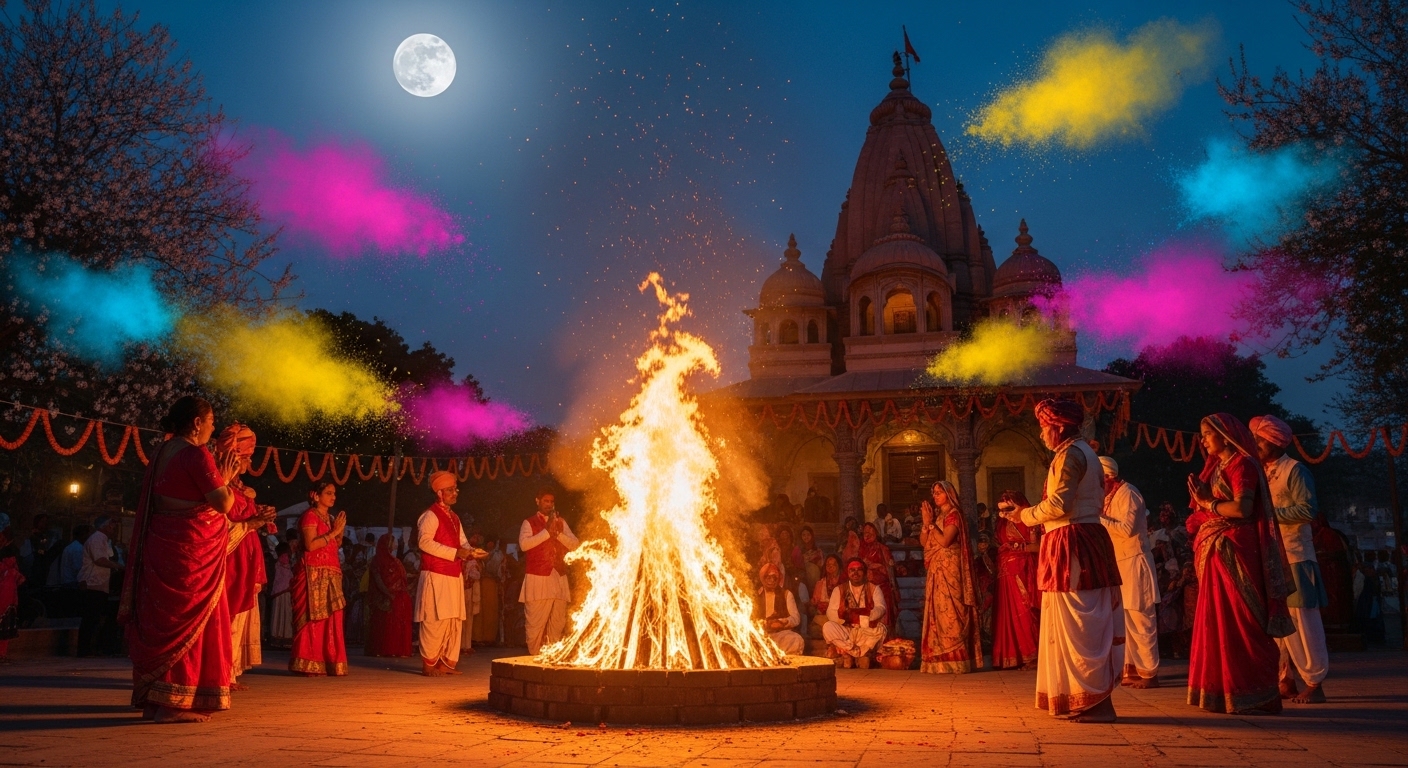
The evening of Phalguna Purnima is marked by Holika Dahan, an important ritual symbolizing the victory of righteousness over evil. Communities gather to light ceremonial bonfires, perform prayers, and offer grains, coconuts, and sacred items into the fire.
This ritual commemorates the legend of Prahlada and his devotion to Lord Vishnu. According to Hindu mythology, the demon king Hiranyakashipu sought to destroy his son Prahlada for his unwavering devotion. With the help of his sister Holika, who possessed a boon protecting her from fire, he attempted to burn Prahlada alive. However, divine intervention saved Prahlada, while Holika perished in the flames.
Holika Dahan serves as a symbolic reminder that arrogance, cruelty, and injustice eventually perish, while faith and devotion endure. Devotees circumambulate the fire, praying for the destruction of negativity in their own lives. The bonfire becomes a powerful metaphor for purification and renewal.
Holi: The Festival of Colors
The day following Holika Dahan is celebrated as Holi, one of the most joyful festivals in India. Streets come alive with laughter, music, dance, and vibrant colors. People apply colored powders (gulal) on each other, splash colored water, and celebrate with sweets and festive meals.
Holi transcends social boundaries. Differences of caste, class, age, and background momentarily dissolve as everyone participates in the celebration. It is a festival of equality, unity, and shared happiness.
In many regions, Holi celebrations are deeply connected with the playful legends of Lord Krishna. In Mathura and Vrindavan, the festivities reenact Krishna’s joyous interactions with Radha and the gopis. The throwing of colors symbolizes divine love and the many hues of life—compassion, friendship, joy, and devotion.
Holi also carries a deeper message: forgive past grievances, mend relationships, and begin anew. The act of coloring one another represents acceptance and inclusion.
Gaura Purnima and Devotional Celebrations
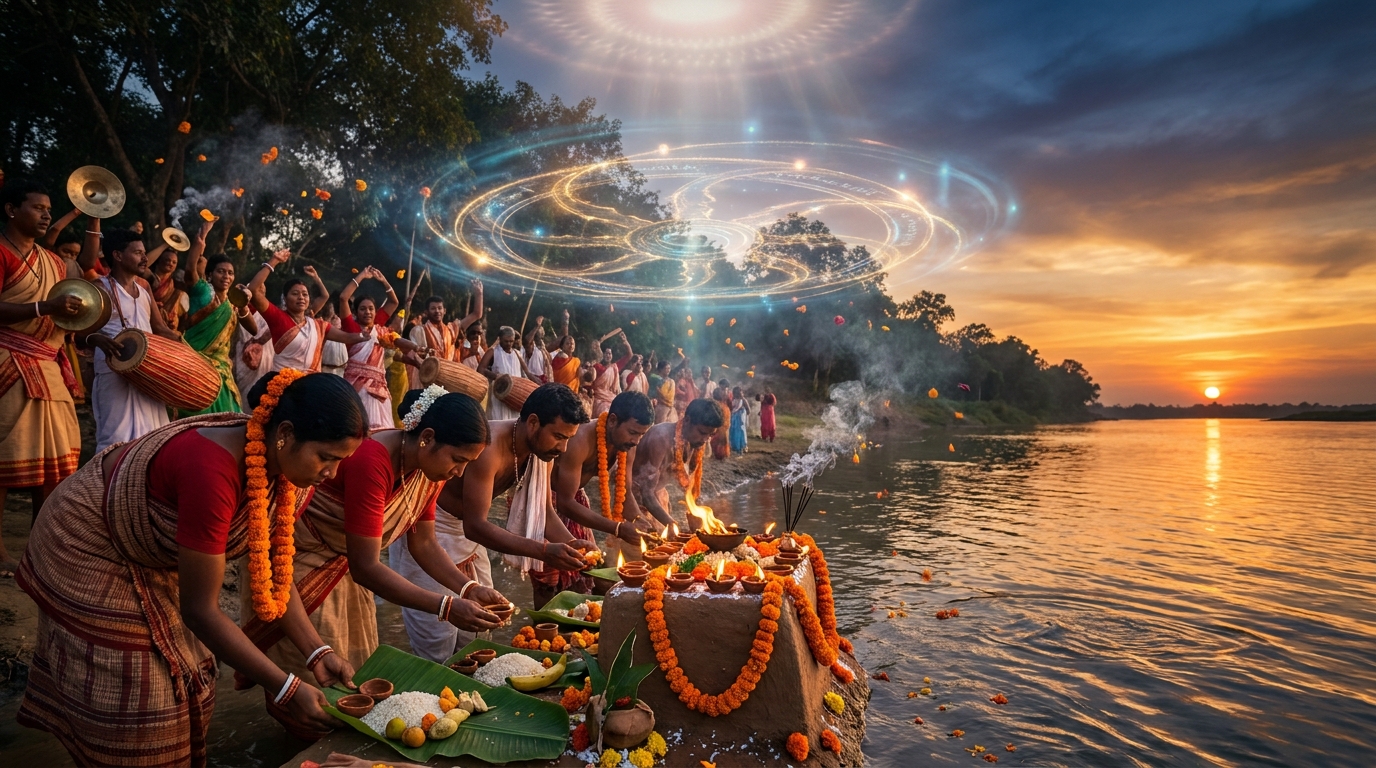
Phalguna Purnima is also celebrated as Gaura Purnima, marking the appearance day of Chaitanya Mahaprabhu, a revered saint and proponent of the Bhakti movement. Born in 1486 in present-day West Bengal, he emphasized devotion through the chanting of the holy names of Krishna.
Devotees gather in temples to perform kirtans, recite scriptures, and reflect on his teachings of humility, compassion, and unconditional love. Gaura Purnima celebrations highlight the importance of collective devotion and spiritual unity.
In places like Mayapur and other Vaishnava centers, grand processions and spiritual discourses are organized. The chanting of the Hare Krishna mantra echoes through temples and streets, creating an atmosphere of deep devotion and joy.
Satyanarayana Vrat and Full Moon Worship
Many Hindu families observe the Satyanarayana Vrat on Phalguna Purnima. This ritual is dedicated to Lord Vishnu in his form as Satyanarayana, the embodiment of truth. Devotees perform puja, listen to the Satyanarayana Katha, and distribute prasad among family and friends.
Fasting is commonly observed on this day. Some devotees abstain from grains, while others follow a complete fast until the evening puja. The vrat is believed to bring prosperity, harmony, and fulfillment of wishes.
Full moon days are considered highly auspicious for charity. People donate food, clothes, and money to those in need, reinforcing the values of generosity and compassion.
Regional Variations in Phalguna Purnima Celebrations
Phalguna Purnima is celebrated differently across various regions of India, reflecting the country’s cultural diversity.
In Uttar Pradesh, especially in Barsana and Vrindavan, Holi festivities can last for several days. The famous Lathmar Holi in Barsana reenacts playful traditions associated with Radha and Krishna, attracting thousands of visitors.
In West Bengal and Odisha, Gaura Purnima celebrations are prominent, with devotional singing and temple gatherings honoring Chaitanya Mahaprabhu.
In Maharashtra and Gujarat, families gather for Holika Dahan and celebrate Rang Panchami a few days later. Communities organize cultural programs, music, and traditional dances.
In South India, while the color celebrations may be less intense, the spiritual observances of Purnima, temple visits, and fasting remain important.
Even outside India, Hindu communities in Nepal, Mauritius, Fiji, the United States, and the United Kingdom celebrate Phalguna Purnima with enthusiasm, preserving cultural heritage abroad.
Agricultural and Seasonal Importance
Phalguna Purnima also marks an important agricultural transition. In many parts of India, the Rabi crops approach harvest time. Farmers celebrate the abundance of nature and express gratitude for a successful season.
The festival reinforces the bond between humans and nature. It reminds communities to respect the environment and acknowledge the cycles of growth and renewal that sustain life.
The arrival of spring is seen as a blessing, bringing fresh energy and hope. The blossoming of flowers and the mild warmth of the season create a perfect setting for celebration.
Social and Psychological Impact
Beyond rituals and mythology, Phalguna Purnima has profound social significance. Festivals play an essential role in strengthening community bonds. Families reunite, neighbors share sweets, and old misunderstandings are resolved.
Psychologically, the celebration of colors and collective joy releases stress and fosters emotional well-being. The act of laughing, dancing, and playing together nurtures a sense of belonging.
Holi’s message of forgiveness and renewal encourages people to let go of grudges. By symbolically burning negativity during Holika Dahan and celebrating joy the next day, individuals experience both emotional cleansing and social reconnection.
Eco-Friendly Celebrations in Modern Times
In recent years, there has been growing awareness about celebrating Phalguna Purnima in environmentally responsible ways. Natural herbal colors are preferred over chemical-based powders to prevent harm to skin and water bodies.
Water conservation has also become a focus, encouraging dry Holi celebrations. Communities are increasingly mindful of reducing pollution during bonfire rituals by using eco-friendly materials.
These changes align with the festival’s core message of harmony—with oneself, with others, and with nature.
Symbolism of the Full Moon
The full moon of Phalguna carries deep symbolic meaning. It represents fullness, enlightenment, and spiritual clarity. Just as the moon reflects the sun’s light, devotees are reminded to reflect divine virtues in their lives.
The bright moonlight is often associated with calmness and introspection. Many people meditate or spend time in prayer under the full moon sky, seeking guidance and inner peace.
The lunar energy is believed to influence emotions, making it an ideal time for spiritual practices and self-reflection.
The Timeless Relevance of Phalguna Purnima
In today’s fast-paced world, Phalguna Purnima offers a meaningful pause. It invites individuals to reconnect with tradition, family, and inner spirituality. The rituals teach resilience, devotion, and gratitude.
The legend of Prahlada emphasizes unwavering faith. The playful colors of Holi celebrate diversity and unity. The teachings of Chaitanya Mahaprabhu inspire compassion and devotion. Together, these elements create a holistic celebration that balances joy with spiritual depth.
Phalguna Purnima remains relevant because it addresses universal human needs—the desire for connection, renewal, forgiveness, and hope.
Conclusion
Phalguna Purnima is far more than a seasonal festival. It is a sacred convergence of mythology, spirituality, and cultural celebration. From the flames of Holika Dahan to the vibrant hues of Holi, from devotional kirtans to acts of charity, the day embodies renewal in every sense.
As the full moon shines brightly in the spring sky, it reminds us to illuminate our hearts with love and truth. It encourages us to burn away negativity, embrace joy, and celebrate the richness of life’s colors.
In essence, Phalguna Purnima stands as a timeless festival of faith, unity, and transformation—an annual reminder that light always triumphs over darkness and that every ending carries the promise of a beautiful new beginning.