

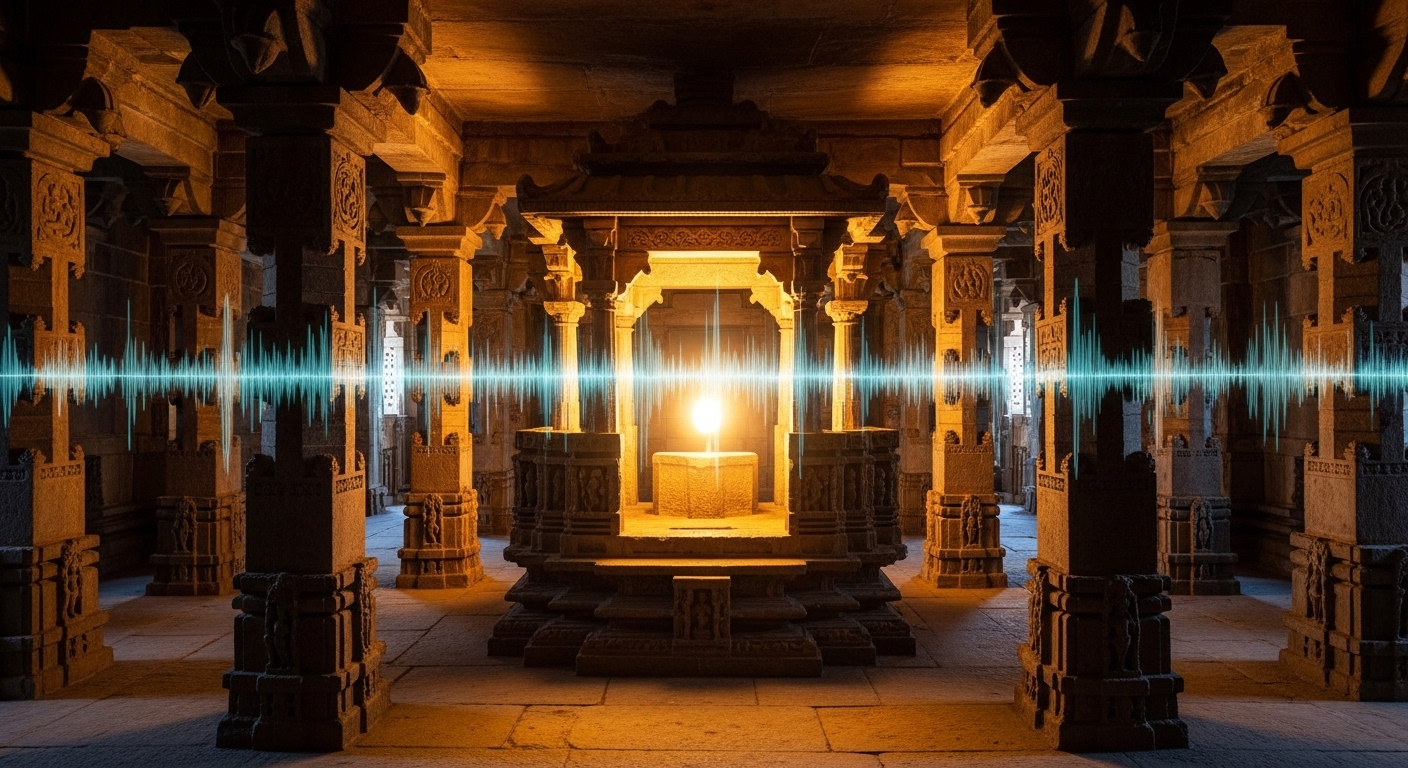
Ancient Indian temples are widely admired for their spiritual depth, artistic excellence, and architectural grandeur. However, beyond their visual magnificence lies a lesser-discussed scientific achievement: acoustic engineering. Many temples across India were designed with a deep understanding of sound resonance, vibration, echo control, and spatial acoustics. These features were not accidental. They reflect a sophisticated knowledge system that integrated physics, mathematics, and spiritual philosophy.
This article presents a scientific examination of acoustic engineering in ancient Indian temples, exploring how sound was intentionally designed to enhance ritual practices, chanting, and meditative experiences.

The Role of Sound in Indian Spiritual Traditions
In Indian philosophy, sound holds sacred importance. The concept of “Nada Brahma” suggests that the universe itself is sound vibration. Vedic rituals, mantra chanting, temple bells, and musical instruments are all rooted in this philosophy.
Temples were not merely places of worship; they were acoustic chambers designed to amplify sacred vibrations. Priests chanted mantras in Sanskrit, a language known for its phonetic precision. The architecture ensured that these sounds resonated clearly and consistently within the temple space.
Scientific studies show that rhythmic chanting can synchronize brain waves and induce calm mental states. Ancient architects appeared to understand the psychological and physiological impact of sound long before modern neuroscience confirmed it.
Architectural Design and Sound Resonance
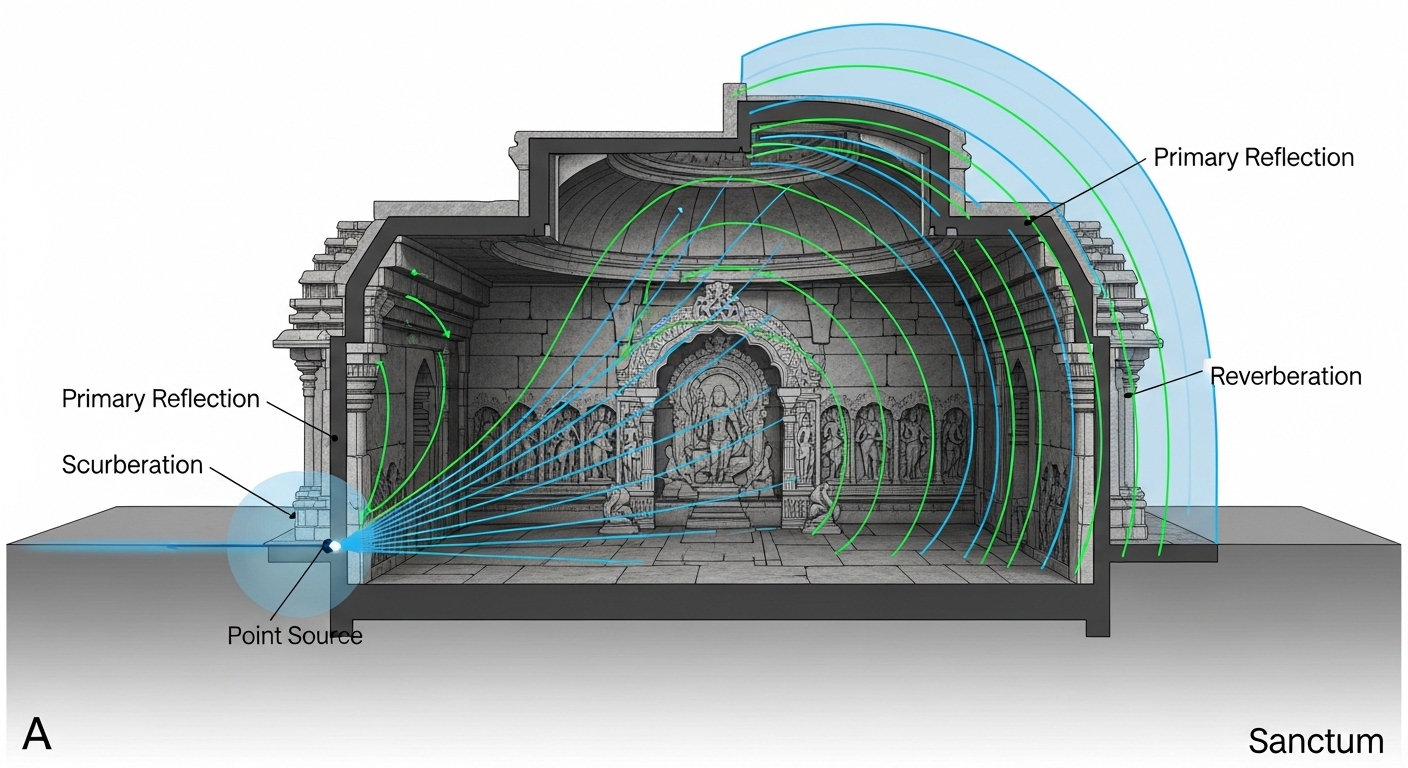
One of the most fascinating aspects of temple construction is the use of geometry to control sound. Temple sanctums, known as “garbhagriha,” were typically small, enclosed spaces built with thick stone walls. These enclosed chambers functioned like resonating cavities.
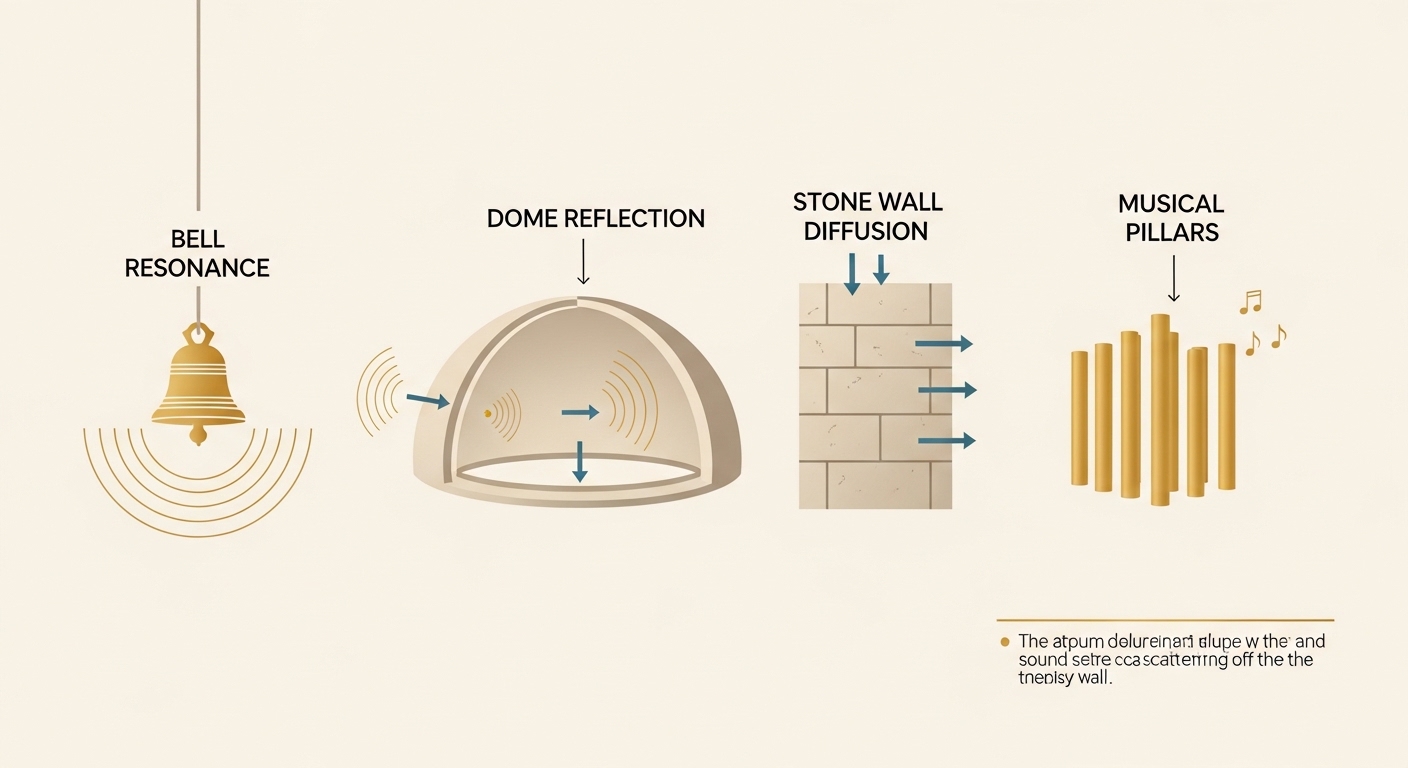
The curved ceilings and dome-like structures helped reflect sound waves inward rather than dispersing them. When a mantra was chanted, the sound waves bounced off stone surfaces, creating a prolonged echo and amplifying the vibration.
Granite and sandstone, commonly used in temple construction, are dense materials with excellent sound reflection properties. Unlike modern buildings that use absorbent materials, temples relied on reflective surfaces to enhance resonance.
This deliberate use of materials demonstrates an advanced understanding of acoustic physics.

The Science Behind Temple Bells
Temple bells are another example of acoustic precision. Traditional bells were made using specific metal alloys, often combining copper, tin, zinc, silver, and even small amounts of gold. This combination produced a long-lasting reverberation.
When struck, the bell generates multiple harmonic frequencies. These frequencies interact to produce a rich, sustained sound that can last several seconds. Scientifically, such harmonic resonance stimulates the auditory cortex and promotes mental alertness.
Additionally, the bell sound typically ranges between frequencies that align with the human brain’s alpha wave state, associated with relaxation and focus. This suggests that temple bells were designed not just for ritual symbolism but also for measurable psychological impact.
Pillars That Produce Musical Notes
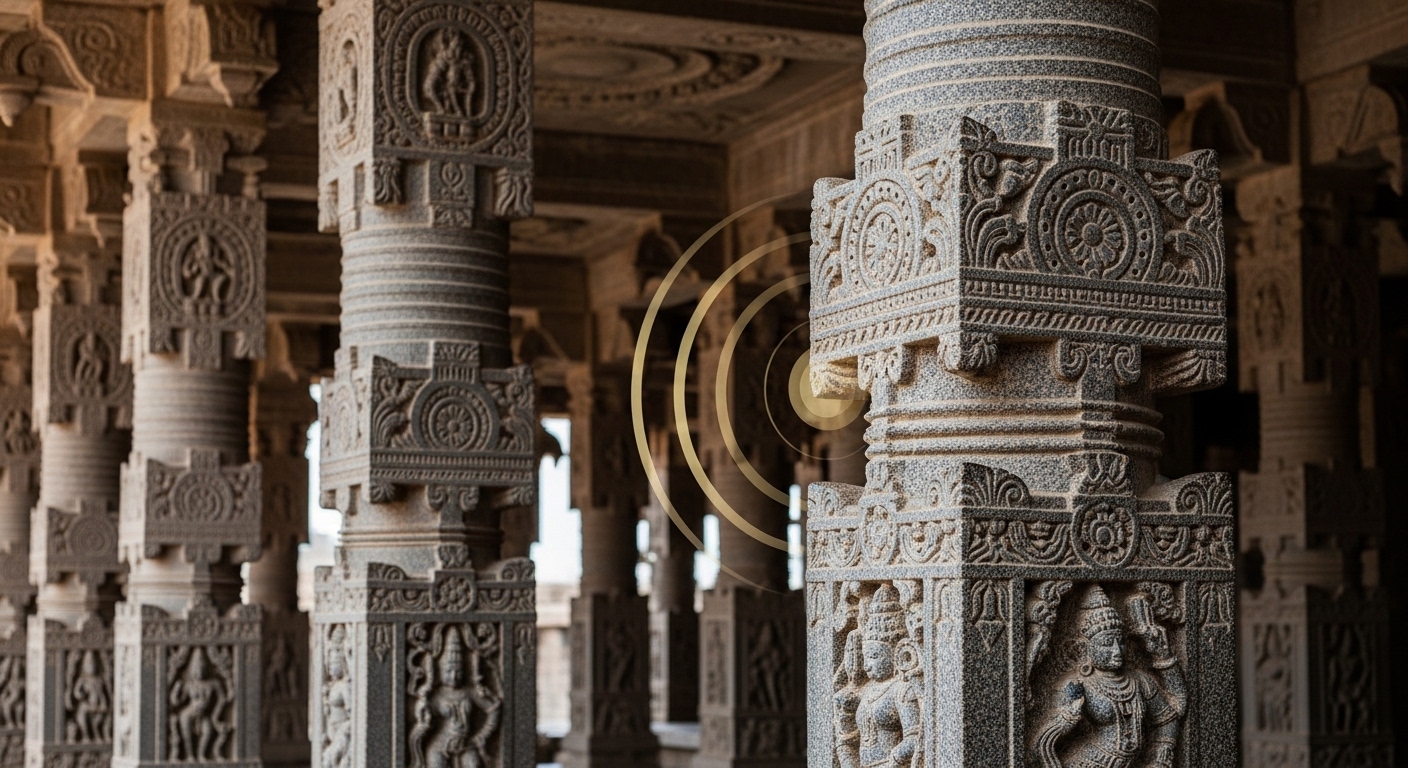
Certain temples in India, such as the Vittala Temple in Hampi, feature musical pillars. When gently tapped, these stone pillars produce distinct musical tones.
From an engineering perspective, these pillars were carved from single stone blocks with precise internal density distribution. The length, diameter, and carving patterns influence vibration frequency.
Modern acoustic engineers analyze resonance using mathematical formulas that calculate natural frequencies. Ancient craftsmen achieved similar results through empirical knowledge and generational expertise.
These musical pillars show that temple builders understood the relationship between material density, structural design, and vibrational output.
Dome Structures and Echo Management
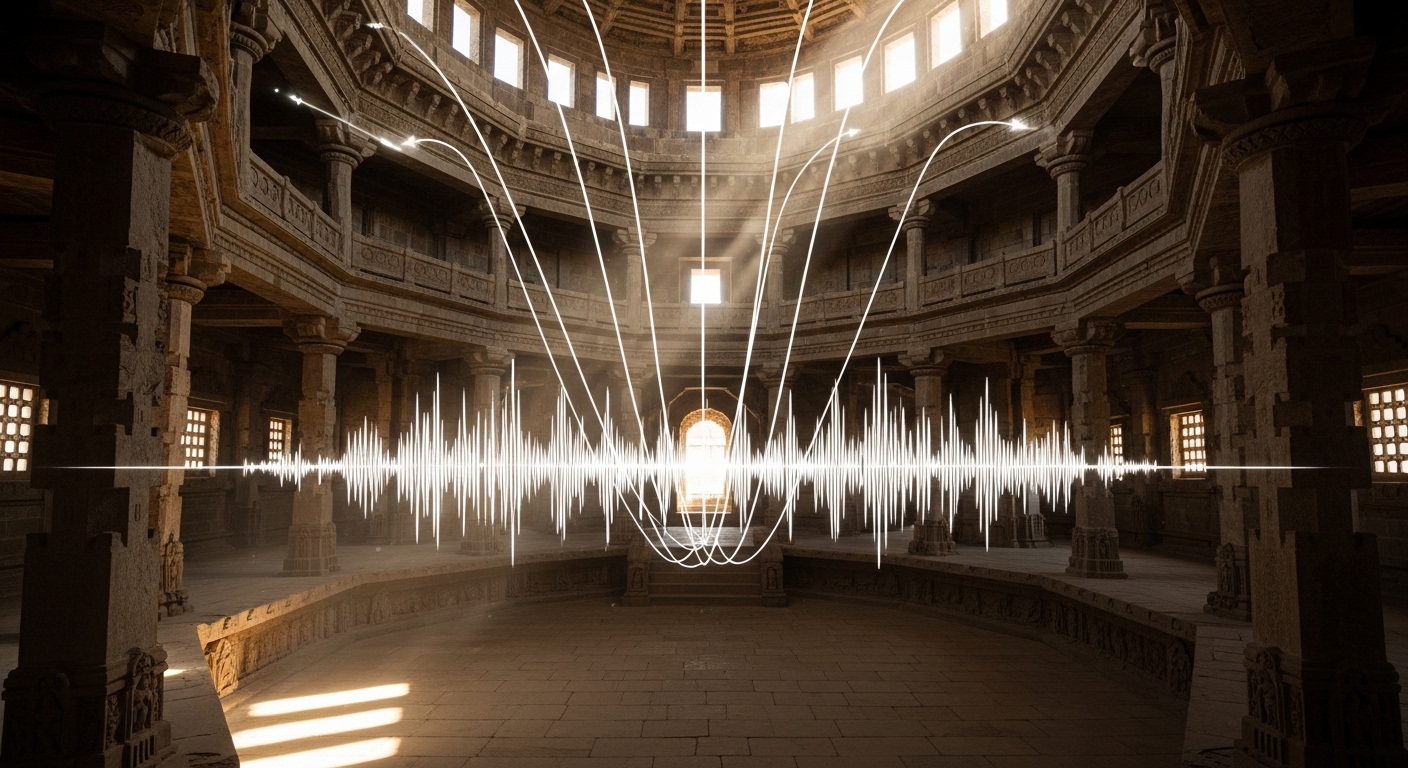
Large temple halls often include domes or mandapas. Domes naturally focus and distribute sound waves. In acoustic science, curved surfaces can concentrate sound toward a focal point.
In temples, this meant that even a soft chant could travel clearly across large spaces without electronic amplification. The geometry minimized sound distortion and maintained clarity.
Some temples also demonstrate controlled echo effects. Instead of chaotic reverberation, the echo is subtle and harmonious. This indicates intentional planning rather than coincidence.
Modern auditoriums use computer simulations to achieve similar acoustic optimization. Ancient temple architects relied on mathematical proportions and practical experimentation.
Mantra Chanting and Vibrational Science
Mantras are composed of syllables that create specific vibrational patterns. When repeated in a resonant chamber like a temple sanctum, these vibrations intensify.
Scientific research suggests that repeated sound frequencies can influence breathing patterns and heart rate variability. The stone walls of temples enhance low-frequency sounds, producing a grounding effect.
Furthermore, the symmetrical design of temples ensures even sound distribution. This prevents dead zones where sound weakens. As a result, participants experience uniform acoustic immersion.
The synergy between mantra science and architectural acoustics reflects a holistic design philosophy that integrated spirituality with physics.
Ventilation and Sound Balance
Temple design also considered airflow. Proper ventilation ensured that sound waves were not distorted by excessive humidity or temperature changes.
Open corridors and pillared halls allowed controlled airflow while maintaining acoustic integrity. The alignment of entrances and inner chambers reduced external noise interference.
This passive noise control resembles modern soundproofing strategies, though achieved without synthetic materials.
Comparison with Modern Acoustic Engineering
Modern acoustic engineering relies on measurable parameters such as reverberation time, frequency response, and sound absorption coefficients. When analyzing ancient temples using these metrics, many structures demonstrate impressive acoustic efficiency.
For example, the reverberation time inside certain sanctums falls within the optimal range for vocal clarity. The reflective stone surfaces provide natural amplification similar to concert halls.
While contemporary architecture depends on microphones and speakers, temple builders achieved amplification through design alone.
This comparison highlights the advanced scientific insight embedded in traditional construction methods.
Cultural Knowledge as Applied Science
It is important to recognize that ancient Indian temple acoustics were not accidental discoveries. They were the result of applied scientific knowledge transmitted through texts like the Shilpa Shastras and Vastu Shastra.
These treatises included detailed guidelines on proportions, measurements, orientation, and material selection. Though expressed in traditional language, many principles align with modern engineering concepts.
The fusion of mathematics, geometry, material science, and spirituality created spaces that were both sacred and scientifically sophisticated.
Conclusion
Acoustic engineering in ancient Indian temples represents a remarkable blend of science and spirituality. Through strategic geometry, resonant materials, harmonic metal alloys, and dome structures, temple architects optimized sound amplification and clarity without modern technology.
From the sustained resonance of temple bells to the musical pillars of Hampi and the echo-enhancing sanctums, each element reflects intentional acoustic design. Modern scientific analysis continues to validate the precision embedded in these ancient structures.
Understanding temple acoustics through a scientific lens not only deepens appreciation for traditional architecture but also positions it within the broader history of engineering innovation. Ancient Indian temples stand as enduring examples of how sound, structure, and spirituality were harmoniously integrated into architectural masterpieces.