
As winter fades and the first signs of spring appear, India comes alive with vibrant celebrations that mark the victory of good over evil. Among these, Chhoti Holi and Holika Dahan hold a special place in the Hindu calendar, ushering in joy, color, and spiritual significance. While the exuberance of Holi is widely celebrated with colors and festivity, Chhoti Holi and the sacred bonfire of Holika Dahan carry deeper cultural, moral, and spiritual meaning.
These observances are rooted in devotion, mythology, and symbolism, emphasizing the victory of righteousness, faith, and courage over arrogance and malice.
Understanding Chhoti Holi
Chhoti Holi, also known as Small Holi, is celebrated a day before the main Holi festival. The term “Chhoti” literally means “small” or “minor,” but the significance of this day is far from minor. Chhoti Holi sets the stage for the larger celebration of colors by focusing on rituals, community gatherings, and spiritual reflection.
In many regions, Chhoti Holi is an occasion for family reunions, preparing for Holi festivities, and honoring local traditions. The day is marked by offerings to deities, community prayers, and sometimes, smaller-scale color play.
In North India, Chhoti Holi is closely associated with the lighting of bonfires and rituals of purification, serving as a prelude to the exuberant color-fest of Holi that follows.
The Mythology Behind Holika Dahan
The central story of Holika Dahan revolves around the triumph of devotion, faith, and righteousness over evil. This story is found in Hindu scriptures and Puranas, with the central characters being Prahlada, Holika, and Hiranyakashipu.
Hiranyakashipu, a powerful king, believed himself to be invincible and demanded that all his subjects worship him instead of the gods. However, his son, Prahlada, remained a steadfast devotee of Lord Vishnu, defying his father’s commands. Enraged, Hiranyakashipu plotted to kill Prahlada.
Holika, Hiranyakashipu’s sister, possessed a magical cloak that made her immune to fire. She tricked Prahlada into sitting with her in a bonfire, intending that he would burn while she remained unharmed. However, Prahlada’s unwavering devotion protected him, and Holika was consumed by the flames.
This story symbolizes the triumph of faith and virtue over malice and arrogance, making the Holika Dahan bonfire a powerful reminder of the victory of good over evil.
Significance of Holika Dahan
Holika Dahan is celebrated on the full moon night of the Hindu month of Phalguna, one day before Rangwali Holi. The rituals of the bonfire carry multiple layers of significance:
- Spiritual Cleansing: The fire symbolizes the destruction of inner evil, negative tendencies, and ignorance.
- Celebration of Devotion: Prahlada’s unwavering devotion to Lord Vishnu serves as a reminder of the power of faith.
- Social Harmony: Communities gather together to participate in the ritual, reinforcing bonds of unity, cooperation, and shared values.
- Seasonal Transition: Holika Dahan coincides with the arrival of spring, marking the end of winter and the renewal of life and energy.
How Holika Dahan Is Celebrated
The celebration of Holika Dahan involves preparation, ritual, and symbolic participation. Here are the key aspects:
1. Collecting the Wood and Materials
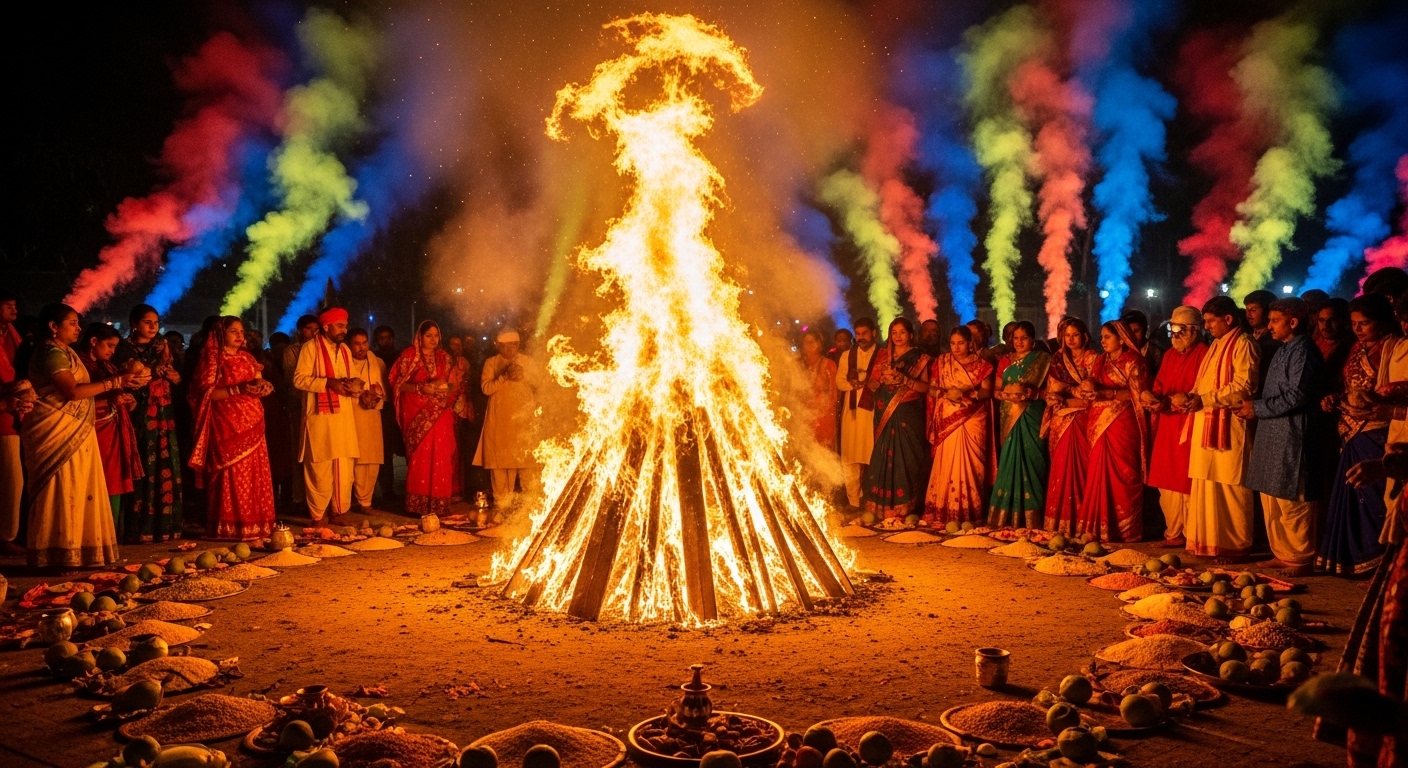
Traditionally, families and communities gather wood, dried grass, and cow dung to build the Holika pyre. The structure is carefully arranged, and often an effigy of Holika is placed atop the pile. This symbolizes the evil that is about to be destroyed.
2. Community Gatherings
Communities come together in the evening to light the pyre. Priests or elders chant sacred mantras invoking the blessings of the gods and praying for protection, prosperity, and purification.
3. Lighting the Fire
As the bonfire is lit, devotees circle it, offer grains, coconuts, and other symbolic items into the flames, and pray for the destruction of negative energies in their lives. The fire represents the divine power that destroys evil and paves the way for positivity.
4. Singing and Dancing
In many regions, folk songs, drums, and dances accompany the bonfire, making the celebration both spiritually significant and socially joyous. Children, adults, and elders participate in the communal festivities, spreading happiness and togetherness.
Symbolism of the Ritual
The Holika Dahan bonfire is not just a physical act but a deeply symbolic ritual:
- Destruction of Ego and Arrogance: Just as Holika’s ego and misuse of power led to her destruction, human arrogance and malice are symbolically burned away.
- Faith as a Protector: Prahlada’s devotion illustrates that sincere faith can protect one from harm, even in the direst situations.
- Renewal and Rebirth: The bonfire’s flames signify transformation, purifying the soul and making way for new beginnings.
This symbolism makes the festival as much about spiritual introspection as it is about celebration.
Regional Variations in Celebration
While Holika Dahan and Chhoti Holi are celebrated across India, regional practices differ:
- North India: Communities perform large bonfires, accompanied by singing, dancing, and storytelling of Prahlada’s legend.
- Maharashtra and Gujarat: Bonfires are smaller and often accompanied by traditional folk songs. People also prepare festive foods in preparation for Holi.
- Uttar Pradesh and Bihar: Rituals include singing bhajans, lighting pyres in temples, and offering grains or coconuts to the flames.
- Rajasthan: Some regions include throwing colored powders or flowers into the fire as offerings, symbolizing devotion and joy.
Despite regional differences, the underlying theme remains consistent: the victory of good over evil.
Preparing for Rangwali Holi
Chhoti Holi and Holika Dahan also serve as preparation for the main Holi festival, Rangwali Holi, which is celebrated with colors the next day. Chhoti Holi encourages reflection, devotion, and spiritual cleansing before the playful celebrations of colors and joy. It sets the tone for the festival, reminding participants that the celebration of joy is intertwined with the triumph of righteousness.
Many families prepare sweets, like gujiya, malpua, and thandai, on Chhoti Holi to share with neighbors and relatives. The communal spirit of preparation fosters harmony and strengthens social ties.
Spiritual Lessons from Chhoti Holi and Holika Dahan
The festivals of Chhoti Holi and Holika Dahan carry lessons that extend beyond mythology:
- Faith Protects: Like Prahlada, steadfast faith in virtue, truth, and righteousness can protect against adversity.
- Evil Is Temporary: Malice, arrogance, and selfishness ultimately lead to self-destruction.
- Renewal Is Essential: Just as the bonfire clears negativity, individuals must periodically cleanse their minds, hearts, and spirits.
- Community and Unity: Shared rituals strengthen bonds, teaching that collective celebration is as important as individual devotion.
- Joy with Responsibility: Celebration should be rooted in meaning, not just superficial enjoyment.
By observing these festivals, devotees cultivate inner strength, moral values, and social harmony.
Modern Celebrations
In contemporary India, Chhoti Holi and Holika Dahan continue to thrive both in urban and rural communities:
- Urban Celebrations: Large community bonfires are organized in parks and residential areas, accompanied by cultural programs.
- Digital Awareness: Social media and online platforms share the story of Prahlada and Holika, spreading awareness of the festival’s spiritual significance.
- Eco-friendly Practices: Increasingly, communities use natural materials for bonfires to minimize environmental impact, reflecting modern awareness and sustainability.
Even in cities, the festival retains its blend of devotion, folklore, and communal celebration.
Conclusion
Chhoti Holi and Holika Dahan are more than pre-festive rituals; they are profound celebrations of devotion, righteousness, and community. Through the bonfire of Holika Dahan, the triumph of good over evil is not just remembered—it is experienced spiritually and socially. Chhoti Holi sets the tone, preparing hearts and minds for the exuberance of Rangwali Holi.
These festivals remind us that joy is intertwined with virtue, that devotion can protect and uplift, and that communities thrive when they celebrate together. As the flames of Holika Dahan rise into the night sky, they illuminate the timeless truth that faith, courage, and righteousness will always overcome adversity.
In essence, Chhoti Holi and Holika Dahan are celebrations of life, morality, and the enduring human spirit—a message as vibrant and timeless as the colors of Holi itself.