
Eid-e-Milad, also known as Id-e-Milad or Mawlid al-Nabi, is one of the most important Islamic festivals celebrated across the world. It commemorates the birth anniversary of Prophet Muhammad (PBUH), the last messenger of Islam, who brought the message of peace, brotherhood, and guidance through the Holy Quran. This festival is observed by millions of Muslims with devotion, gratitude, and respect for the Prophet’s teachings.
The festival holds deep spiritual, cultural, and social importance in the Muslim community. It is a time of reflection, prayer, charity, and community gatherings. The day also emphasizes living a life guided by the values of compassion, justice, humility, and kindness taught by the Prophet.
History of Eid-e-Milad
The origins of Eid-e-Milad trace back to the early Islamic world. Prophet Muhammad was born in 570 CE in Mecca, in the month of Rabi’ al-Awwal, the third month of the Islamic lunar calendar. The exact date of his birth is debated among scholars, but most traditions accept the 12th of Rabi’ al-Awwal as the day of celebration.
Historical accounts suggest that the festival began in the 11th century under the Fatimid dynasty in Egypt. Over time, the celebration spread to different regions of the Islamic world, including the Middle East, South Asia, Africa, and Southeast Asia. Each region developed its own traditions and cultural expressions of reverence toward the Prophet.
Significance of Eid-e-Milad
Eid-e-Milad is not only a commemoration of the Prophet’s birth but also an opportunity for Muslims to renew their faith and reconnect with his message. The Prophet’s teachings emphasized the values of equality, honesty, charity, and love for humanity.
Some key aspects of its significance include:
- Spiritual Growth: Muslims engage in prayers, recitation of the Quran, and religious discourses to strengthen their connection with Allah and the Prophet.
- Unity of the Community: Gatherings in mosques and community centers bring Muslims together, reinforcing bonds of brotherhood.
- Acts of Charity: Helping the poor and needy is considered one of the most important practices during this festival.
- Cultural Identity: The festival is celebrated with unique traditions in different regions, reflecting the diversity of the Muslim world.
How Eid-e-Milad is Celebrated
Eid-e-Milad celebrations vary across regions, but the spirit of devotion remains the same. Some common practices include:
1. Prayers and Religious Gatherings
Special prayers are held in mosques where Muslims listen to sermons about the life, character, and message of Prophet Muhammad. Scholars and religious leaders share insights into his teachings and guide people on how to apply them in their daily lives.
2. Processions and Decorations
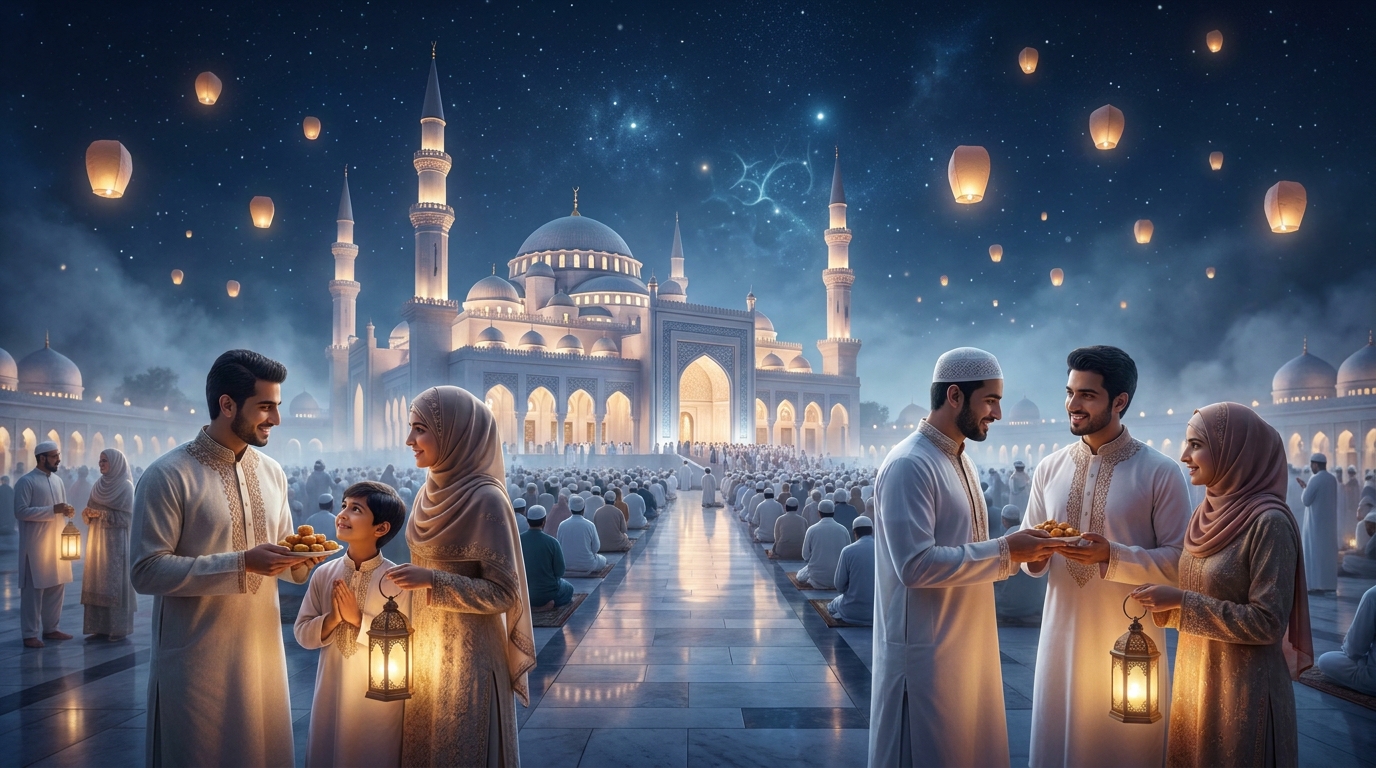
Streets, mosques, and homes are decorated with lights, green flags, and banners. In some places, processions are carried out where devotees chant praises of the Prophet and spread messages of peace and unity.
3. Recitation of Naats and Qawwalis
Devotional songs in praise of the Prophet, known as naats and qawwalis, are recited during the festival. These songs highlight his virtues, sacrifices, and role as the guiding light for Muslims.
4. Acts of Charity and Sharing Food
Charity plays a central role in the festival. Muslims distribute food, clothes, and essential items to the needy. Community feasts are organized where people share meals with family, friends, and underprivileged individuals.
5. Cultural Celebrations
Different countries and regions celebrate Eid-e-Milad in unique ways. In South Asia, processions and large community meals are common, while in Middle Eastern countries, mosques organize special lectures and gatherings.
The Teachings of Prophet Muhammad Remembered on Eid-e-Milad
On this occasion, Muslims reflect on the values taught by Prophet Muhammad, which include:
- Compassion: Caring for the poor and orphans.
- Honesty: Maintaining truthfulness in personal and professional life.
- Justice: Treating people fairly, regardless of social or economic status.
- Peace: Promoting harmony within families, communities, and societies.
- Faith: Strengthening one’s relationship with Allah through prayers and good deeds.
These teachings are not only religious but also serve as universal values for humanity.
Differences in Observance
It is important to note that not all Muslim communities observe Eid-e-Milad in the same way. While it is widely celebrated among Sunni and Shia Muslims, some groups do not commemorate the day, considering it an innovation (bid’ah) that was not practiced during the Prophet’s lifetime. Despite these differences, the majority of Muslims view Eid-e-Milad as an opportunity to express their love and respect for Prophet Muhammad.
Modern-Day Celebrations
In today’s world, Eid-e-Milad is celebrated with both traditional and modern elements. Social media platforms are filled with posts honoring the Prophet, while mosques livestream sermons for those unable to attend in person. Community organizations arrange food drives, educational events, and interfaith dialogues to promote peace and understanding.
The festival continues to evolve, adapting to new generations while keeping its spiritual essence alive.
Cultural Impact of Eid-e-Milad
Eid-e-Milad has a deep cultural impact, particularly in countries like India, Pakistan, Bangladesh, Indonesia, and parts of Africa. Processions with decorated floats, traditional music, and distribution of sweets are common in these regions. It also promotes inter-community harmony, as people of other faiths often join in the celebrations, reflecting the universal message of peace and compassion.
FAQs About Eid-e-Milad
Q1. What is Eid-e-Milad?
Eid-e-Milad, also known as Mawlid al-Nabi, is the Islamic festival that marks the birth anniversary of Prophet Muhammad (PBUH).
Q2. Why is Eid-e-Milad important?
It is important because it reminds Muslims of the Prophet’s teachings on peace, compassion, justice, and devotion to Allah.
Q3. When is Eid-e-Milad celebrated?
Eid-e-Milad is observed on the 12th day of Rabi’ al-Awwal, the third month of the Islamic lunar calendar.
Q4. How do Muslims celebrate Eid-e-Milad?
Muslims celebrate by offering prayers, reciting naats, organizing processions, sharing food, and performing charitable deeds.
Q5. Do all Muslims celebrate Eid-e-Milad?
While many Sunni and Shia Muslims celebrate it, some groups do not observe Eid-e-Milad, believing it was not part of early Islamic tradition.
Q6. What is the role of charity in Eid-e-Milad?
Charity is central to the festival, with Muslims donating food, clothes, and money to the needy as a way of honoring the Prophet’s compassion.
Q7. Is Eid-e-Milad a public holiday?
In several countries, including India, Pakistan, and parts of the Middle East, Eid-e-Milad is observed as a public holiday.