
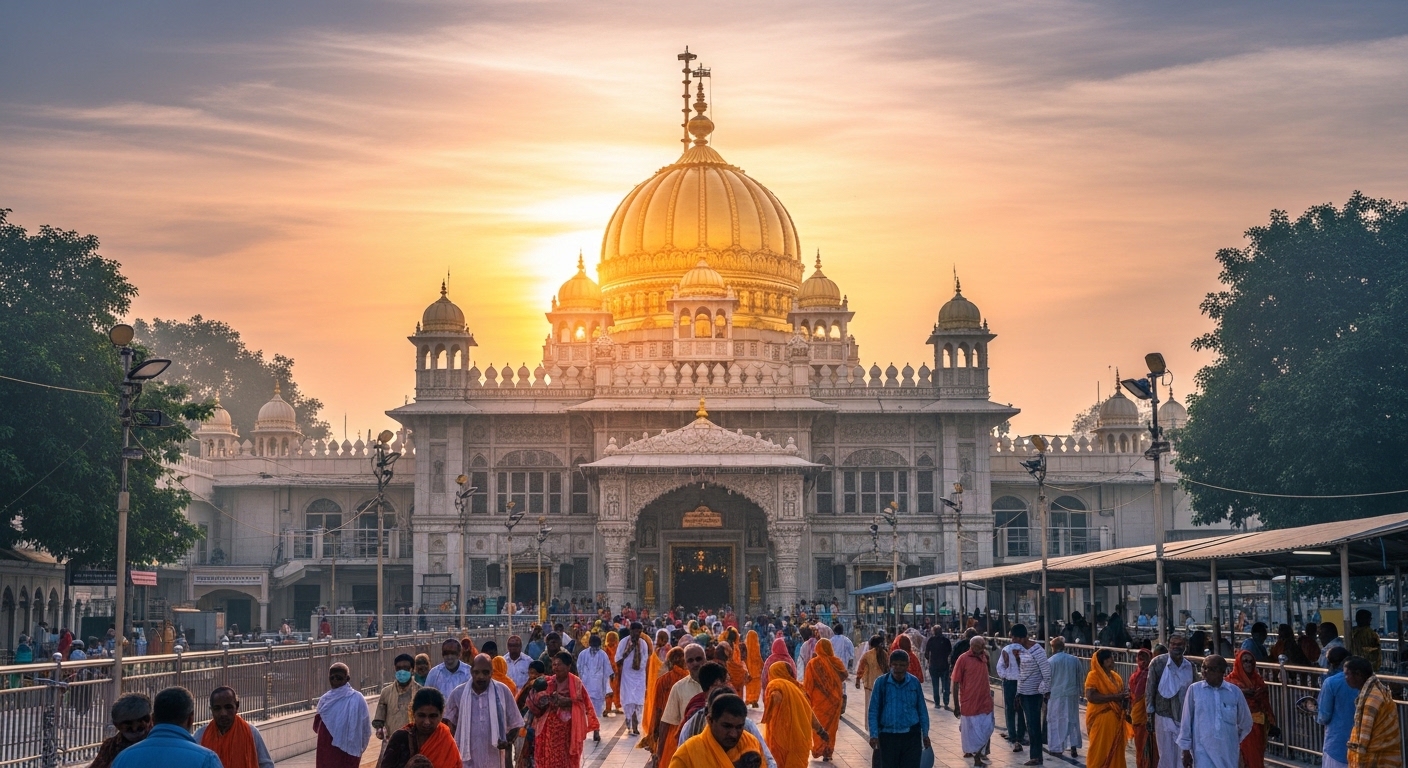
Located in the quiet town of Shirdi, the Shri Sai Baba Samadhi Mandir is one of India’s most visited and spiritually significant pilgrimage destinations. Devotees from across the country and abroad travel here not only to offer prayers but to experience a deep sense of peace, faith, and spiritual reassurance.
This sacred site is dedicated to Sai Baba of Shirdi, a 19th–20th century saint whose teachings continue to inspire millions regardless of religion, caste, or background.
The Spiritual Significance of Shirdi
What makes Shirdi truly remarkable is not just the temple structure, but the philosophy it represents. Sai Baba’s message was simple yet profound — faith in the Divine, patience during hardships, compassion toward all beings, and service without expectation.
He welcomed both Hindus and Muslims, lived in a mosque, used terms from multiple religious traditions, and encouraged devotees to remain devoted to their own faiths while respecting others. This inclusive approach transformed Shirdi into a living symbol of harmony and unity.
A Legacy of Faith and Devotion
Sai Baba arrived in Shirdi as a young ascetic and chose to live a life of simplicity. He spent time meditating under a neem tree and later resided in a mosque that became known as Dwarkamai. His daily life revolved around guiding devotees, distributing food, offering spiritual advice, and helping the needy.
On October 15, 1918, Sai Baba attained Mahasamadhi. After his passing, devotees preserved his resting place, which later developed into the present-day Samadhi Mandir. The shrine was built through the devotion of followers including Gopalrao Butti, whose dedication ensured that Baba’s memory would remain alive for generations.
Today, the temple stands not merely as a memorial, but as a vibrant spiritual center where millions gather annually.
Important Places Within the Temple Complex
1. Samadhi Mandir
At the heart of the complex lies Sai Baba’s Samadhi, built with white marble and adorned with a serene statue depicting him seated in a calm posture. Devotees queue patiently for darshan, believing that even a brief moment before the Samadhi brings blessings and inner strength.
2. Dwarkamai
Dwarkamai holds deep historical and spiritual importance. This simple mosque was where Sai Baba spent a significant portion of his life. The sacred fire (dhuni) that he kept burning continues even today, and the ash distributed from it is considered holy by devotees.
3. Chavadi
Chavadi is another revered site where Sai Baba stayed on alternate nights. It remains an important part of temple traditions and reflects the simplicity with which he lived.
Architectural Character
The temple’s design reflects a blend of cultural influences. The central dome and arches echo Islamic architectural elements, while the inner sanctum follows the traditional layout of a Hindu temple. This harmonious blend beautifully mirrors Sai Baba’s teachings of unity beyond religious divisions.
Intricate carvings, spacious prayer halls, and open courtyards allow visitors to meditate and participate in devotional activities in a peaceful environment.
Festivals and Devotional Gatherings
Major celebrations draw thousands of pilgrims to Shirdi each year. Among the most significant are:
- Guru Purnima
- Ram Navami
- Vijayadashami (Mahasamadhi Day)
These occasions are marked by special prayers, devotional singing, and ceremonial processions.
Temple Administration and Services
The temple is managed by the Shri Saibaba Sansthan Trust, which oversees daily rituals and pilgrim services. The trust also conducts charitable initiatives such as:
- Free or subsidized meals
- Medical assistance programs
- Educational support
- Accommodation facilities for visitors
These activities reflect Sai Baba’s lifelong emphasis on kindness and service to humanity.
Visiting Information
Location: Shirdi, Ahmednagar district, Maharashtra
Darshan Timings: Early morning to late evening
Facilities: Prasadalaya, accommodation, donation services, online booking, and security arrangements
Nearest Railway Station: Sainagar Shirdi railway station
Nearest Major Airports: Mumbai, Pune, and Nashik
Why Millions Continue to Visit
For many, Shirdi is not just a pilgrimage — it is a place of emotional healing and spiritual reassurance. Devotees often share experiences of renewed hope, strengthened faith, and a sense of divine guidance after visiting.
Sai Baba’s enduring message — that faith and patience can overcome life’s difficulties — continues to resonate deeply in today’s world.
Conclusion
The Shri Sai Baba Samadhi Mandir remains one of India’s most powerful spiritual landmarks. Rooted in humility and sustained by devotion, it stands as a reminder that true spirituality lies in love, compassion, and unity.
A visit to Shirdi is not merely about ritual; it is about reconnecting with faith, finding inner calm, and embracing the universal message that all paths ultimately lead to the same Divine truth.
15 FAQs About Shri Sai Baba Samadhi Mandir
1. Where is Shirdi Sai Baba Temple located?
The temple is located in Shirdi, in the Ahmednagar district of Maharashtra.
2. Who was Sai Baba of Shirdi?
Sai Baba of Shirdi was a revered saint and spiritual teacher known for preaching unity, faith, compassion, and harmony among religions.
3. What are the temple darshan timings?
The temple generally opens around 4:45 AM and closes at 10:00 PM. Timings may vary on festivals.
4. Is there an entry fee for darshan?
General darshan is free. Special or quick darshan tickets are available at nominal charges.
5. What is the significance of the Samadhi Mandir?
The Samadhi Mandir houses the final resting place of Sai Baba and features his white marble idol where devotees offer prayers.
6. What is Dwarkamai?
Dwarkamai is the mosque where Sai Baba lived for many years. The sacred dhuni (eternal flame) still burns there.
7. What is Chavadi in Shirdi?
Chavadi is where Sai Baba used to rest on alternate nights and is part of temple traditions.
8. Which festivals are celebrated at the temple?
Major festivals include Guru Purnima, Ram Navami, and Vijayadashami (Mahasamadhi Day).
9. Who manages the Shirdi temple?
The temple is administered by the Shri Saibaba Sansthan Trust.
10. Is accommodation available near the temple?
Yes, the Sansthan Trust and private hotels provide rooms and dormitory facilities for pilgrims.
11. Is photography allowed inside the temple?
Photography is not permitted inside the main temple premises.
12. How can I book online darshan?
Devotees can book darshan and accommodation through the official website of the temple trust.
13. What is the nearest railway station?
The nearest station is Sainagar Shirdi railway station.
14. Which is the nearest airport to Shirdi?
Nearby airports include Mumbai, Pune, and Nashik.
15. Why is Shirdi considered spiritually powerful?
Devotees believe the temple radiates divine energy due to Sai Baba’s presence, teachings, and continued blessings experienced by pilgrims.