
Vat Savitri Vrat is one of the most revered fasting traditions observed by married women in India. Rooted deeply in devotion, faith, and ancient mythology, this sacred vrat is dedicated to the long life, well-being, and prosperity of one’s husband. Beyond rituals, it reflects the strength of love, determination, and spiritual power attributed to women in traditional Hindu culture.
This festival is not merely a ritualistic observance but a symbolic expression of unwavering marital devotion. It blends mythology, spiritual discipline, and cultural heritage into a meaningful practice that has been passed down through generations.
In this blog, we explore the significance, story, rituals, and deeper meaning of Vat Savitri Vrat in a simple, engaging, and spiritually enriching way.
What is Vat Savitri Vrat?
Vat Savitri Vrat is a traditional Hindu fasting ritual observed by married women for the longevity and well-being of their husbands. The vrat is dedicated to the sacred banyan tree (Vat tree) and honors the legendary devotion of Savitri, whose love and determination are said to have conquered even death.
This vrat is especially popular in various parts of India, where women observe strict fasting, perform puja rituals, and pray with deep devotion under or near a banyan tree. The ritual symbolizes the strength of marital bonds and the belief that sincere prayers can protect and preserve family harmony.
Mythological Story Behind Vat Savitri Vrat
The origin of Vat Savitri Vrat is rooted in one of the most inspiring stories in Hindu mythology.
The tale revolves around Savitri and her husband Satyavan.
According to the legend, Savitri was a devoted and intelligent princess who chose Satyavan as her husband despite knowing that he was destined to die young. Her love was unwavering, and she accepted her fate with courage.
On the predicted day of Satyavan’s death, Savitri accompanied him into the forest. While he was cutting wood, he suddenly collapsed as his life force was taken away by Yama, the god of death. Savitri, however, refused to leave her husband’s side. With wisdom, devotion, and persistence, she engaged Yama in conversation and impressed him with her intelligence and spiritual strength.
Moved by her determination, Yama granted her three boons—except the life of Satyavan. Savitri cleverly used her boons to restore her husband’s kingdom, her father-in-law’s eyesight, and finally the gift of children for her lineage. Since Satyavan was needed for the last boon to be fulfilled, Yama had no choice but to restore his life.
This powerful story represents the victory of devotion, wisdom, and righteousness over destiny itself.
Spiritual Significance of Vat Savitri Vrat
Vat Savitri Vrat holds deep spiritual importance in Hindu culture. It is not just about fasting but about cultivating faith, patience, and inner strength.
The banyan tree plays a central role in this vrat. It symbolizes longevity, stability, and eternal life because of its long lifespan and ever-growing nature. Worshipping the tree represents prayers for a stable and long-lasting marital life.
Spiritually, the vrat highlights the power of determination and devotion. Savitri’s story is often seen as a reminder that love supported by truth and righteousness can overcome even the most challenging circumstances.
The ritual also reinforces values such as respect for marriage, family unity, and gratitude for life’s blessings.
Rituals and Traditions Followed During Vat Savitri Vrat
The observance of Vat Savitri Vrat involves several sacred rituals performed with devotion and discipline.
Married women typically begin the day with an early bath and wear traditional attire, often new or festive clothing. They prepare offerings such as fruits, flowers, sweets, and sacred items required for worship.
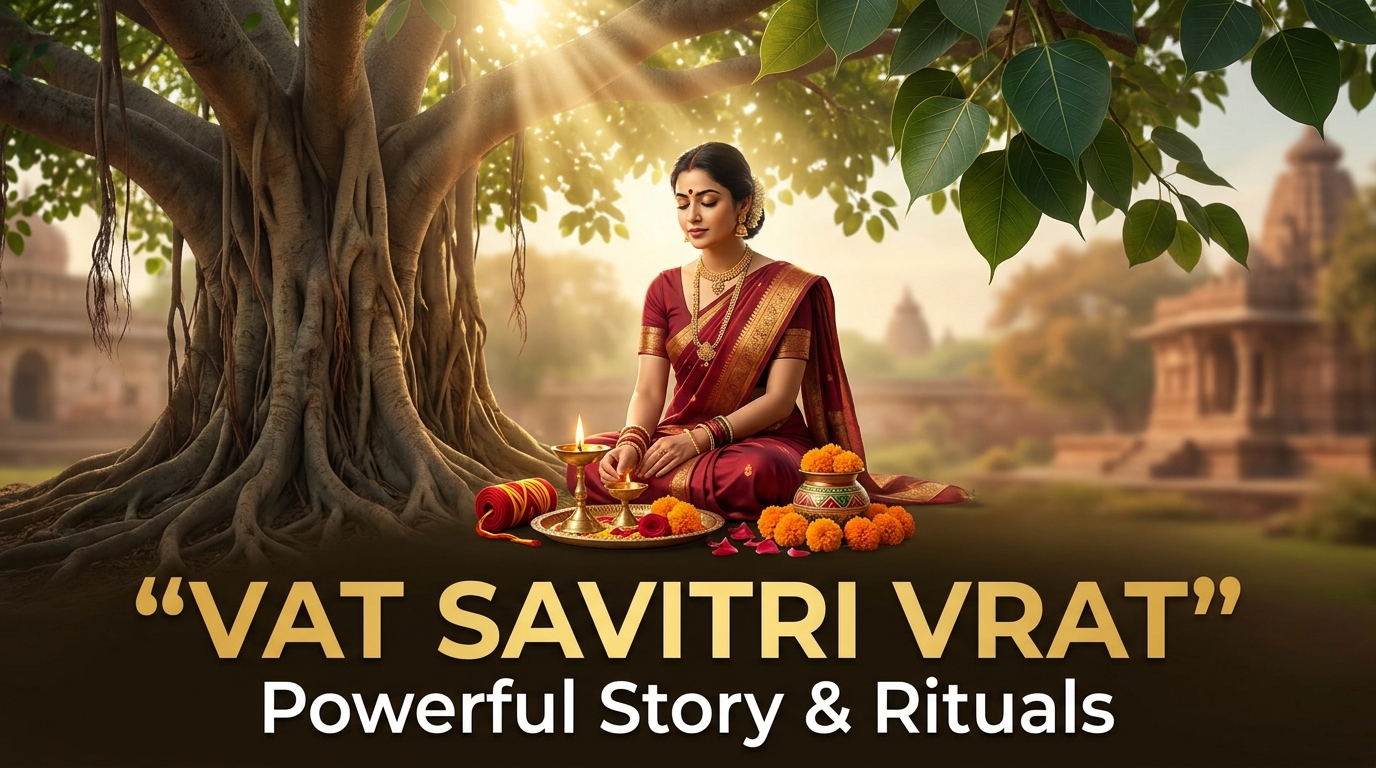
The main ritual is performed near a banyan tree. Women circle the tree multiple times while tying sacred threads around its trunk. This act symbolizes the strengthening of marital bonds and the prayer for their husband’s long life.
During the puja, the story of Savitri and Satyavan is narrated or heard collectively. Women offer prayers, light lamps, and perform rituals with deep concentration and faith. The fasting observed on this day is often strict, with some women abstaining from food and water until the completion of the puja.
In many households, elders guide younger women through the rituals, ensuring that traditional practices are preserved and passed on to future generations.
Importance of Banyan Tree in the Ritual
The banyan tree is considered sacred in Hindu philosophy. Its ability to grow continuously and provide shelter symbolizes immortality and protection.
In the context of Vat Savitri Vrat, the tree represents divine blessings and stability in marriage. Worshipping it is believed to bring peace, prosperity, and long life to one’s spouse.
The act of circling the tree and tying threads is a symbolic gesture of commitment and prayer. It reflects the belief that nature and divinity are interconnected in sustaining human life and relationships.
Regional Variations of Vat Savitri Vrat
While the essence of Vat Savitri Vrat remains the same, its celebration varies across different regions of India.
In northern parts of the country, the vrat is often observed on a specific lunar calendar day, while in western regions, the timing and rituals may slightly differ. Despite these variations, the core belief of praying for the husband’s longevity remains consistent.
In some regions, community gatherings are organized where women come together to perform rituals collectively. In others, it is observed individually at home or in nearby temples where banyan trees are not easily accessible.
These variations highlight the cultural diversity of India while maintaining unity in spiritual practice.
Modern-Day Relevance of Vat Savitri Vrat
In today’s fast-paced world, Vat Savitri Vrat continues to hold cultural and emotional significance. While lifestyles have evolved, many women still observe this tradition as a way to stay connected to their roots.
For some, it is a spiritual practice that reinforces faith and discipline. For others, it is a cultural tradition that strengthens family bonds and preserves heritage.
Even in modern urban settings, where access to banyan trees may be limited, symbolic rituals are performed with equal devotion in homes or community spaces.
The vrat also encourages reflection on relationships, gratitude, and emotional balance in married life.
Emotional and Cultural Importance
Vat Savitri Vrat is deeply emotional for many married women. It represents love, care, and commitment toward their partners. The fasting and prayers are not just ritualistic actions but heartfelt expressions of devotion.
Culturally, it strengthens the identity of traditional practices and helps younger generations understand the importance of values such as loyalty, patience, and respect in relationships.
The story of Savitri continues to inspire countless women, reminding them that courage and devotion can overcome even the most difficult challenges.
Benefits of Observing Vat Savitri Vrat
Although primarily spiritual in nature, many believe that observing Vat Savitri Vrat brings emotional and psychological benefits.
It helps individuals develop discipline through fasting and meditation. The rituals encourage mindfulness and spiritual reflection, creating a sense of peace and purpose.
On a cultural level, it strengthens family bonds and keeps traditional stories alive. It also provides an opportunity for social connection among women who gather to perform rituals together.
Most importantly, it fosters a sense of gratitude and positivity in marital relationships.
Frequently Asked Questions
Why is Vat Savitri Vrat observed?
It is observed by married women to pray for the long life, health, and prosperity of their husbands.
What is the significance of Savitri and Satyavan’s story?
The story symbolizes devotion, intelligence, and the triumph of determination over destiny.
Why is the banyan tree worshipped?
The banyan tree represents longevity, strength, and eternal life, making it a sacred symbol in this ritual.
Can unmarried women observe this vrat?
Traditionally, it is observed by married women, but cultural practices may vary across regions and families.
Conclusion
Vat Savitri Vrat remains one of the most meaningful and spiritually rich traditions in Hindu culture. Through devotion, fasting, and prayer, married women express their love and commitment toward their spouses while honoring ancient mythology.
The inspiring story of Savitri and Satyavan continues to remind us that faith, wisdom, and determination can overcome even the greatest challenges.
At its heart, Vat Savitri Vrat is not just a ritual but a celebration of love, resilience, and spiritual strength. It preserves cultural heritage while offering timeless lessons on devotion and human relationships.